
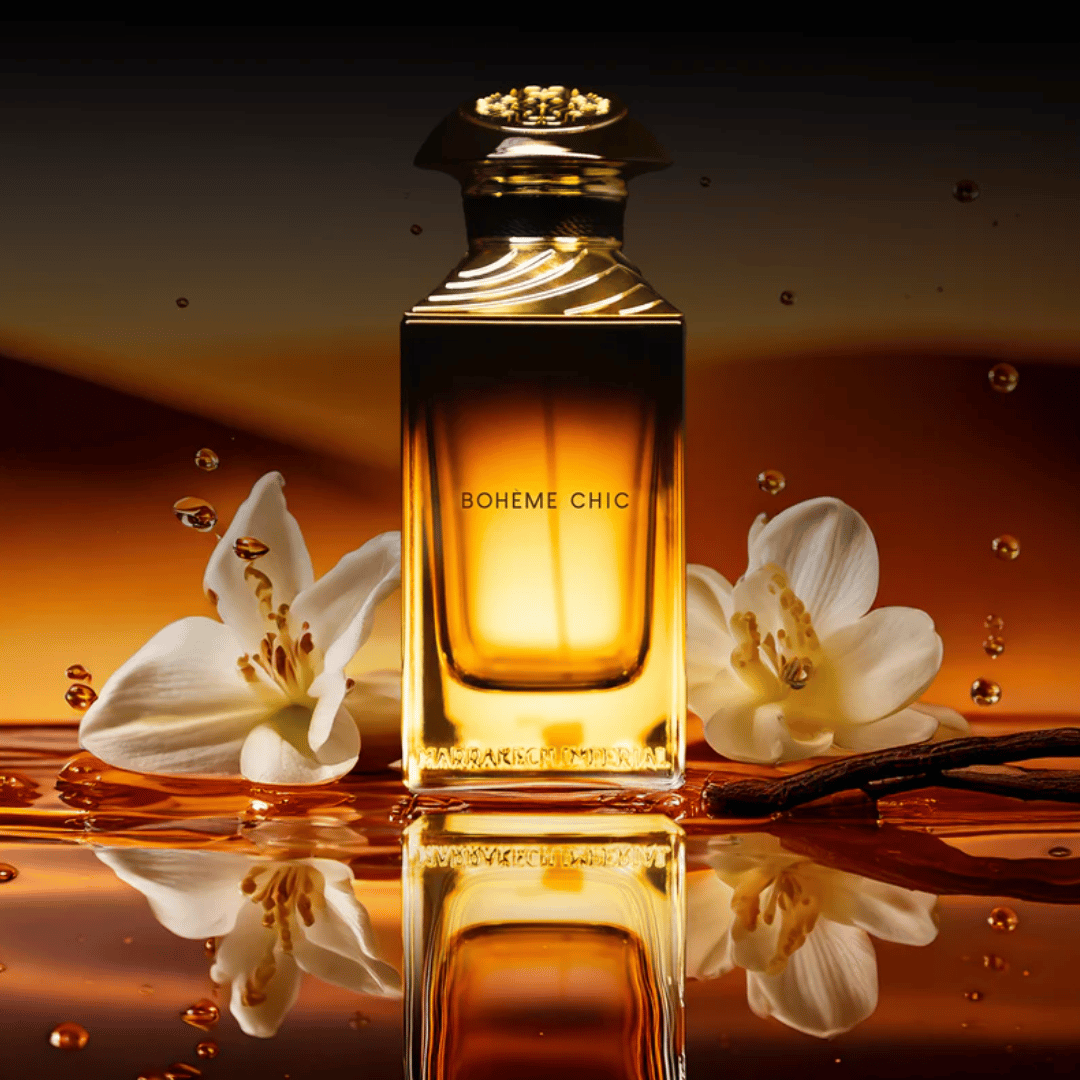

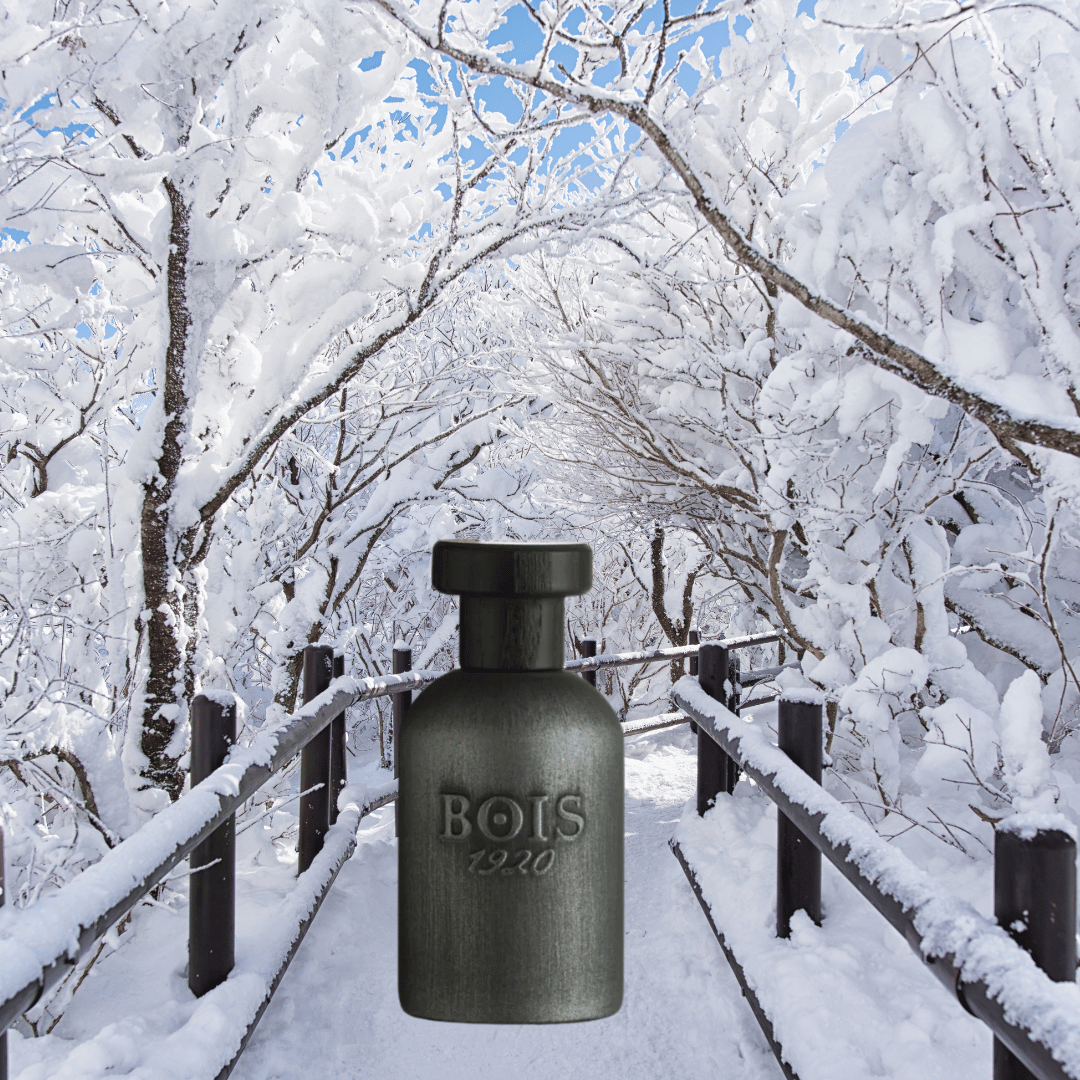
Winter scents that linger – when the cold fades quietly
A guide to winter niche fragrances and niche perfumes: fragrance psychology, warmth, subtle projection, and why a good niche perfume makes a greater impression in winter.
You know that moment: Outside, the air is so clear it almost cuts. Your breath lingers briefly before disappearing, and everything about you becomes more alert—your skin, your thoughts, even the way you walk. Winter isn't just a season. Winter is a state of being. It makes sounds smaller, colors deeper, encounters more conscious. And that's precisely why winter scents affect you differently than anything you like to wear in summer: not through volume, but through intimacy.
Perhaps you're not just looking for any old perfume, but something that feels like a coat without being heavy. Something that warms you without enveloping you. Something that doesn't perform, but lingers.
And here begins the honest truth about good niche winter fragrances: In winter, it's not the loudest fragrance that wins. It's the fragrance that carries you without overpowering you.

When winter fragrances don't smell like a show, but like home
Winter brings you closer to yourself. Not in a romantically idealized way, but realistically: you turn inward earlier – into rooms, conversations, memories. Your senses shift. Cold makes the world seem more objective, and precisely for that reason, you crave something that reconnects you with humanity. Many winter fragrances are like a hand on the shoulder. They don't say, "Look at me." They say, "I'm here."
This is why certain materials work so reliably in winter fragrances. Not because they're labeled "wintery" on a marketing slide, but because they psychologically provide what the cold takes away: soft contours, warmth, comfort, depth. Amber can be like dimmed light. Sandalwood like a quiet, wood-paneled room that's still warm even though the fire has long since died down. Frankincense like air that doesn't just smell, but breathes. Vanilla like warmth at the edges—not as a sweetness, but as a texture.
You'll notice: the colder it is outside, the more you crave fragrances that don't jump around, but settle in. That's a core principle you'll find in every good niche fragrance for winter – whether it's smoky, resinous, woody, or softly musky.
Why niche winter fragrances bring back memories faster
Scent is the fastest way to the past, and winter is the season when you feel this phenomenon most acutely. Perhaps because you're less distracted. Perhaps because you experience more contrasts: cold outside, warm inside. Perhaps because you're more frequently drawn into recurring rituals – tea, scarf, door keys, candlelight, a dark afternoon.
When you wear winter fragrances, you're often not just wearing a scent image, but a story. And this story instantly becomes "believable" in winter because your body supports it: the cool air, the dry skin that evaporates more slowly, the clothing that traps the scent in the fabric. In this way, a scent becomes a trail. And trails are more emotionally resonant than mere effects.
This is also where the opportunity lies for niche perfumes in winter: they can be more complex, because winter is more complex. A good, luxurious niche perfume doesn't have to win you over with citrusy shine. It can have shadows. It can show edges. It can be honest, unvarnished – and yet still elegant.
The big misconception: Winter fragrances don't have to be "strong".

Many people mistake winter-readiness for maximum projection. As if a fragrance in winter automatically has to be louder to compete with scarves, coats, and the cold. You know the result: perfume that fills a room before you've even arrived. Winter scents that don't warm, but rather exhaust. And that's precisely where the problem lies: what's meant to create closeness becomes distance.
The truth is simpler, and it will save you from making the wrong purchase: In winter, you don't necessarily need more volume. You need more substance.
Substance can mean: denser, resinous, woodier, creamier. Substance can mean: a musk that feels like skin, not like detergent. Substance can mean: a leather note that isn't aggressive, but velvety and dark. Or a spicy accord that doesn't burn, but glows. The crucial thing isn't how far a fragrance goes – but how good it stays.
And yes: there are powerful winter fragrances. But power doesn't mean noise. Good power feels like tranquility.
Quiet Projection: Why you make a bigger impression in winter when you do less
In winter, every inch of air becomes more precious. People stand closer together. Doors close faster. Indoor spaces feel more confined. That's precisely why quiet projection is so powerful: you don't impose anything on anyone – you reward closeness.
Subtle projection isn't a weakness, but an attitude. It says: I don't need a physical radius. I need presence. You'll be surprised how often people draw closer to you in precisely these moments—not because you "smell good" in the sense of being pleasing, but because your scent evokes a warm thought.
This also ties in with a subtle technical detail that suddenly becomes relevant in winter: Molecules that allow you to "feel" wood and warmth are often quiet, yet persistent. A touch of Cashmeran can feel like cashmere on the skin, and Iso E Super can impart that transparent, woody aura that doesn't shout, but lingers. That's winter magic without the gimmicks.
Dosage in winter: The two sprayers that can do more than six

If you want to master winter fragrances, it's less about "more" and more about "doing it right." Winter is less forgiving of overdoing it than many think, because everything is closer: people, spaces, fabrics, breath.
A fragrance that feels wonderful on bare skin can suddenly seem too strong on wool or a scarf. A perfume you could easily wear in summer might be too much in winter on the train or in the office – not because it's worse, but because the context is more confined.
That's why dosage is a stylistic choice in winter. You're not wearing "perfume," you're making an impression. Often, it's enough to apply the scent where it naturally resides, without overpowering it: on areas that receive warmth but don't immediately "burst out." Behind the ear can work, but just as well at the base of the neck under the collar, or a spritz on the forearm, which you'll later notice yourself when you move.
This transforms a winter fragrance into a companion rather than a statement. And that's the difference between "I wear perfume" and "I have an aura."
Winter fragrances on dry skin: Why skincare suddenly becomes part of your scent

Skin becomes drier in winter. Period. And dry skin causes many fragrances to turn sour more quickly: they either become weaker or suddenly seem harsher because the smooth transition is missing. So if you feel that winter fragrances "fade too quickly" or start off "too harsh" on you, it's often not the fragrance itself, but the base of your skin that's the problem.
A simple, unscented moisturizer can do more for your fragrance in winter than another spritz. Not as a trick, but as a base. The fragrance then has something to cling to. And suddenly, the same niche perfume seems more rounded, warmer, more controlled.
This isn't some cosmetic wisdom, it's winter reality. And it's the reason why niche winter fragrances can look incredibly elegant on some people – and jarring on others. The difference often isn't the bottle. It's the skin.
Winter scents inspired by feeling: warmth, shade, fabric – and you right in the middle of it all.
If you want to not just "choose" winter fragrances, but truly understand them, don't start by looking at the notes. Look at the feeling.
Do you crave warmth that feels like light? Then you often seek amber , balsamic resins, velvety woods, and sometimes a dark hint of vanilla that doesn't have to be sweet. Do you crave shade that calms you? Then smoky, incense-like, leathery nuances can be just right—not for drama, but for depth. Do you crave fabric, that textile, cozy quality? Then creamy woods, musky textures, and those subtle "skin scents" are often more powerful in winter than anything loud.
This way you make decisions that will work in the long run. And you'll automatically end up with winter fragrances that don't have to be trendy because they suit you.
The moment a winter fragrance truly begins

A good winter fragrance doesn't start with the first spritz. It starts in the second hour, when you've almost forgotten about it. When you take off your jacket, your scarf briefly carries your scent, and you realize: something lingers, something unobtrusive. Something that isn't prim and proper, but vibrant. That's the point where exceptional winter fragrances distinguish themselves from "good fragrances."
And that is precisely where this kind of elegance arises, which cannot be bought if one is only looking for volume: elegance that allows for closeness.
When you wear winter fragrances this way, the distinction between men's and women's fragrances suddenly becomes less rigid. Many niche winter scents work best as unisex perfumes because winter itself tends to simplify everything: style becomes clearer, gestures become calmer, and the effect becomes more genuine.
Winter fragrances that won't overwhelm anyone: Your shortcut to more style
If you wanted to sum it all up in a single winter rule, it would be this: Wear your winter fragrance so that it accompanies you – not so that it replaces you.
That's also the most honest basis if you want to buy niche perfume without overestimating your budget. The loudest perfume isn't necessarily the best. The sweetest isn't necessarily the coziest. The darkest isn't automatically the most sophisticated. Sophistication is what you control.
And when you find this control, something wonderful happens: You need less. And you are more effective.
A subtle addition for indoors: When winter shouldn't just be on your skin.
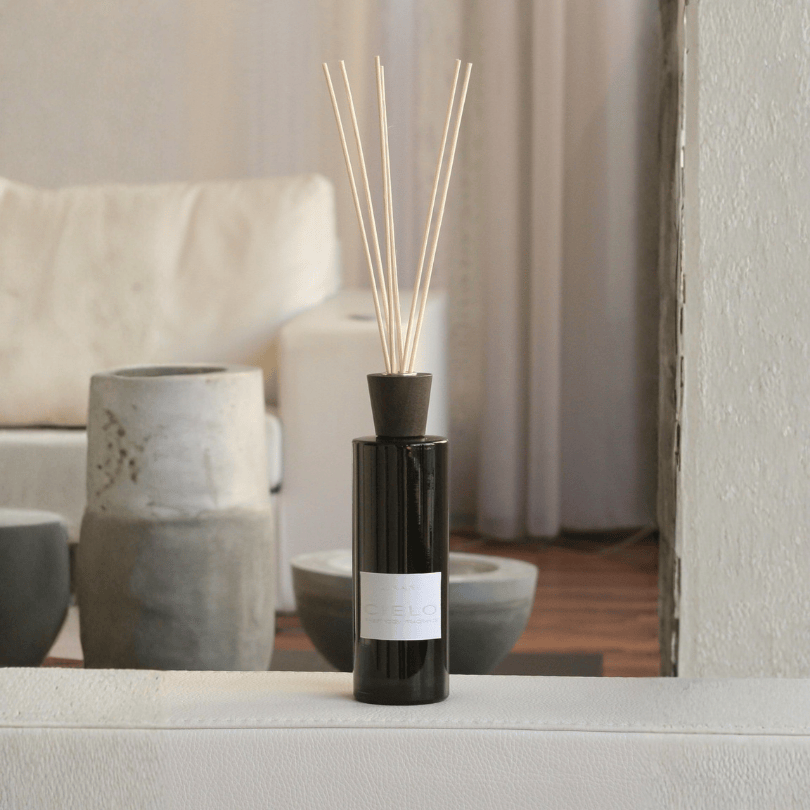
Sometimes you don't just want to wear winter, but to place it in a room – so that it welcomes you when you come home. Then it's not about projection, but about atmosphere. A scented candle or a diffuser can create exactly this kind of "quiet presence" that winter can handle so well. If that's what you like, a classic like Trudon Ernesto isn't decoration, but a ritual: you don't light it, you shift the mood. And suddenly the evening feels different, before you've even said a word.
Winter isn't just about the weather. Winter is a rhythm.
FAQ Everything you need to know about winter niche perfumes
How can I find winter fragrances that aren't too strong?
Focus on texture rather than volume: warm woods, resins, musk transparency and a “quiet projection” often look more elegant in winter than aggressive sillage.
Why do winter fragrances sometimes last longer on me?
Dry winter skin can "cut off" fragrances more quickly. An unscented moisturizer as a base makes many winter fragrances smoother and longer-lasting, without needing to apply more spray.
Are winter niche fragrances more of a men's fragrance or a women's fragrance?
Many niche winter fragrances work best as unisex perfumes because winter fragrances tell a story of warmth, depth and closeness – not clichés.
How do I use winter fragrances correctly in everyday life?
Less is more: Use fragrance so that it accompanies you. Two gentle sprays are often enough to make you present without overpowering a room.
Why is testing with samples particularly worthwhile when it comes to winter fragrances?
Because winter fragrances depend heavily on skin tone, clothing, and the room. Samples help you find out more quickly which style really suits you – without the pressure of buying the wrong thing.
Copyright by scent amor © 2025 (grw)
More articles on the scent news blog by scent amor:
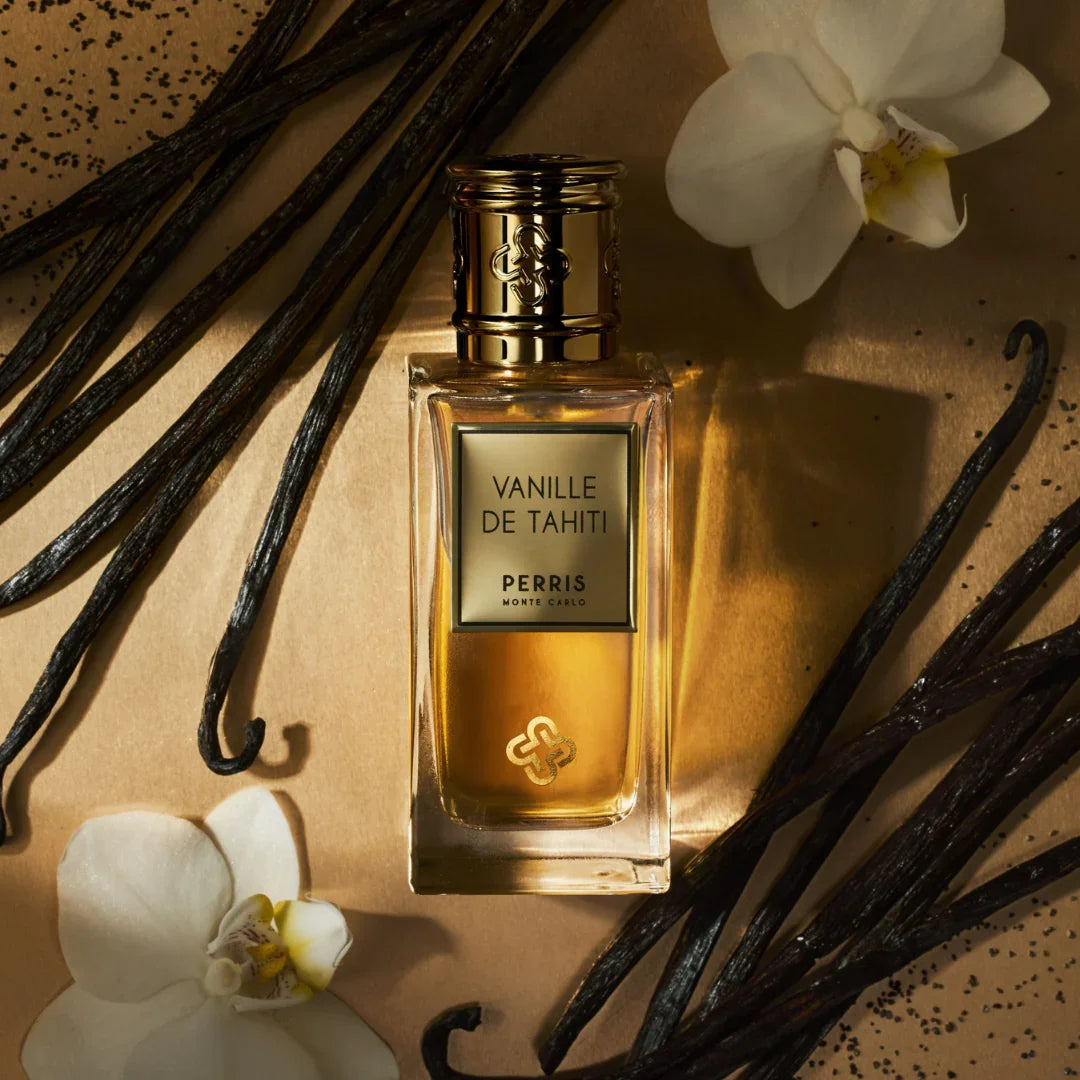
Niche perfumes with vanilla – why this delicious scent lasts through all seasons
If vanilla is to be more than just December decoration, you need context: cold, skin, light, mood. This guide shows you niche perfume interpretations for every month – from protective to skin-frien...


Leave a comment
All comments are moderated before being published.