


EU regulations, banned ingredients and the new responsibility of fragrance culture

You don't notice it immediately. And that's precisely what makes it so disconcerting. You're wearing a fragrance you've known for years—perhaps even loved—and only after some time does this vague feeling arise that something is different. Not worse. Not wrong. But shifted. Less shadow in the base, a brighter heart, a cleanliness that used to seem softer. Perfume doesn't disappear anymore. It changes subtly . And this change isn't driven by fashion, but by legal regulations.
This report is not an indictment of regulation, nor a nostalgic lament for a supposedly better past. It is a precise analysis of what happens when security logic collides with olfactory culture – and why this collision is changing Europe's olfactory memory more profoundly than any trend.
Regulation doesn't begin with scent, but with the body.
The European Union does not consider perfume an art form, but a cosmetic. Something you apply to your skin regularly, often for decades. The standard is toxicological. Not emotional. Not historical. What matters is not whether a fragrance is iconic, but whether individual ingredients are sensitizing, have hormonal effects, or are classified as CMR substances.
Herein lies the crux of the conflict. Perfume thrives on nuance, on friction, on precisely those borderline areas that regulation seeks to avoid. Safety and aesthetics are not adversaries – but they speak different languages. And it is precisely this translation work that the industry often lacks. Ultimately, the consequences end up on your skin.
Oakmoss – the moment when perfume history audibly broke
No raw material symbolizes this change more than oakmoss . It wasn't the moss itself, but two components it contains – atranol and chloroatranol – that were banned in the EU due to their high allergenic potential. Scientifically, this decision is sound. Culturally, it was a watershed moment.
Oakmoss was never just a fragrance note. It was architecture, gravity, darkness. It gave chypres and fougères that dry, slightly bitter depth that once made perfumes seem sophisticated. With the removal of these molecules, the image remains, but the emphasis shifts. Modern, purified oakmoss qualities are technically brilliant—but they are translations, not originals. Less patina, less tension, less of that quiet restlessness that brings great fragrances to life.
A reformulated classic is not a betrayal. But it's not a time capsule either. Anyone who can't smell the difference isn't smelling closely enough.

Lyral – when cleanliness lost its self-evidence
Another change came more quietly, but just as effectively: the ban on Lyral (HICC). For decades, it had been the backbone of clean, soft floral accords. It smelled of order, of well-cared-for skin, of modern clarity. Not spectacular, but indispensable.
Lyral didn't disappear because it was problematic from an olfactory perspective, but because it caused too many sensitizations from a toxicological point of view. The result was no simple replacement. Other molecules took over similar functions, but the specific transparency couldn't be precisely reconstructed. Many fragrances became smoother, some colder, others lost that elusive sense of naturalness.
Regulation doesn't erase grades. It shifts character .
Lilial – the loss of an invisible comfort
Lilial (Butylphenyl Methylpropional) was a substance that hardly anyone could name, but almost everyone knew. A flowery soft-focus filter, a link between heart and base, a silent guarantor of comfort. Since 2022, Lilial has been banned in the EU because it was classified as toxic to reproduction.
Lilial wasn't a star. It was infrastructure. Its demise forced entire fragrance families to be redesigned. It wasn't the top note that changed first, but the feeling of stability. If you say today that a fragrance "doesn't smell like it used to," it's often not nostalgia—but the direct consequence of regulatory realities.

Prohibition, restriction, labeling – three mechanisms, one effect
Not every regulation is a ban. Some substances are restricted, others are only permitted for specific applications. And then there is the intervention that may change perfume more sustainably than anything else: labeling .
EU Regulation 2023/1545 requires that 56 additional fragrance allergens be individually declared once minimum threshold values are exceeded. This creates transparency – but also psychological pressure. Long INCI lists alter perceptions. They generate uncertainty. Brands often respond not with clarification, but with quiet reformulations to shorten labels.
Regulation thus becomes a matter of style policy. It indirectly determines which fragrance components remain communicatively viable.
Reformulation as a question of power within the perfume industry
What is rarely said openly is that reformulation is not a purely technical task. It is a question of power. Large corporations have their own molecular libraries, captive substances, and budgets to subtly mitigate the effects of bans. Smaller companies—especially in the niche perfume sector—are under entirely different pressures.
When a defining molecule is missing, it's not about replacement, but about identity. Can a fragrance still be the same without this building block? Or does it become an approximation of itself? Then there's the factor of time. Good reformulations need development and maturation. Regulatory deadlines force speed – and speed is the natural enemy of elegance.
Animal-based raw materials – why abstaining from them is no loss

There are prohibitions that shouldn't cause pain. Natural animal fragrances like real musk are among them. Not out of moralizing, but out of consistency. Beauty based on suffering is not a luxury.
Modern perfumery has long demonstrated that depth, sensuality, and even animalic effects are possible without animal-derived ingredients. Synthetic and biotechnological musk molecules have developed their own precise aesthetic. Regulation doesn't diminish this. It liberates perfume from romanticized baggage.
2026 – not a bang, but a tipping point

What's coming isn't a single, sweeping ban, but rather the continuation of a pattern. Substances newly classified as CMR automatically come under pressure. A frequently cited candidate is hexyl salicylate – a common ingredient for floral warmth and transitions.
It's not yet definitively decided how restrictive the future will be. But one thing is clear: the era of taking things for granted is over. Reformulations under time pressure cost elegance. And elegance is what makes perfume valuable – not the myth of ancient raw materials.
What this means for you
You'll have to test more. Compare more. Question more. Perfume samples will become more important than big names. Batches more important than marketing promises. And you'll have to accept that some fragrances, as you knew them, are gone forever.
This is not a loss. It is maturity. And it opens up space for extraordinary fragrances and a luxurious niche perfume that doesn't cling to the past, but exists in the present.
Why Scent Amor belongs right here
All of this is the context in which scent amor exists. scent amor is not an archive of the past, nor a mouthpiece for trends. It is a response to change. To a world of fragrance where understanding becomes more important than mere availability.
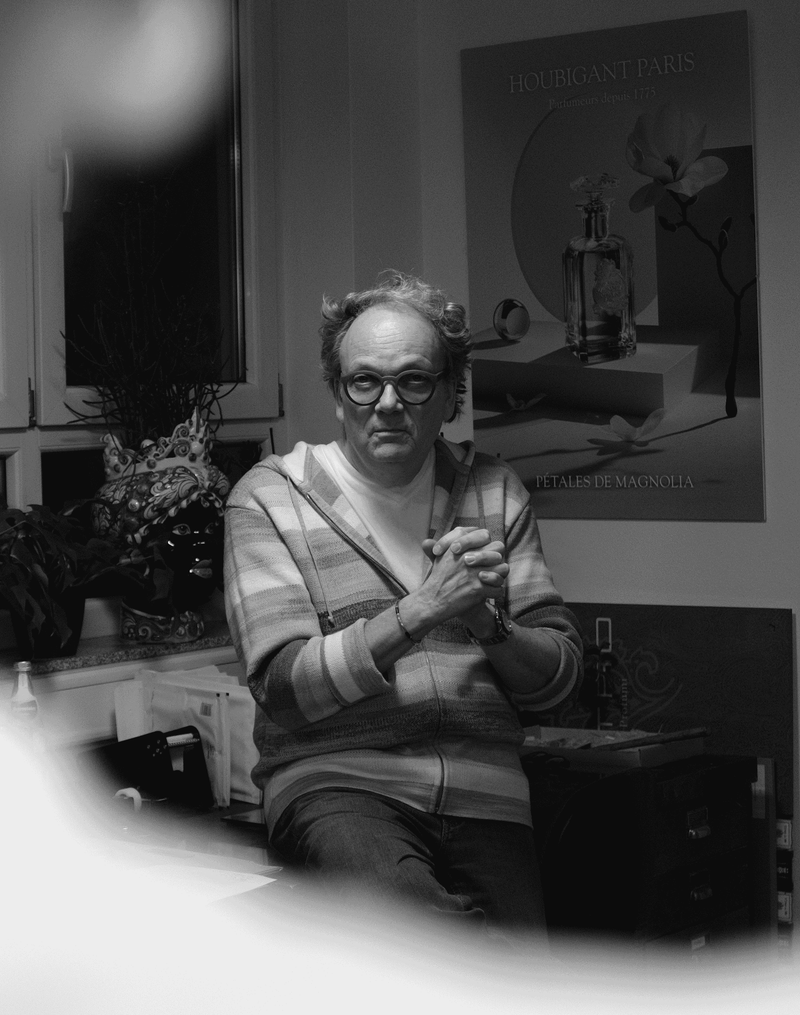
Curating today means taking responsibility: for knowledge, for transparency, for honesty. This responsibility is borne by Georg R. Wuchsa , the heart and soul of scent amor. Not as a salesperson, but as a translator between legal text and skin sensation, between INCI list and emotion.
As a curator, it's not about liking everything. It's about understanding why a fragrance is the way it is today – and why it's worth wearing. Scent Amor is therefore not a place for quick decisions, but a space for comparison, consultation, and time. For conscious selection in an increasingly complex fragrance landscape.
Perfume will continue to evolve. New regulations will come. New molecules will emerge. Scent Amor sees itself not as a resistance movement, but as a compass . For people who want to understand, not just smell. For a fragrance culture that maintains its composure even under regulatory pressure.
Because perfume is not a static object. It is a living expression of its time.
And that is precisely why we need places that can contextualize this period.
FAQ – EU Regulations & Perfume Culture
Why are fragrances banned or restricted in the EU?
The EU classifies perfume as a cosmetic product and adheres to toxicological criteria. Substances with a high allergy, endocrine, or CMR risk are banned or restricted – regardless of their cultural or olfactory significance.
Why do many classic classics smell different today than they used to?
The removal of key molecules such as oakmoss components, Lyral, or Lilial necessitates the reformulation of fragrances. This does not result in lower quality, but rather in altered proportions, textures, and depth.
Are reformulations inherently negative?
No. Reformulations are often technically brilliant, but they are translations, not originals. The character shifts – and it is precisely this shift that is perceived by sensitive noses.
Why are niche fragrances particularly affected?
Smaller fragrance houses don't have the same resources as corporations. If a key molecule is lost, the identity of a fragrance is often at stake. Reformulation becomes a matter of survival.
What role does scent amor play in this change?
Scent Amor sees itself as a curatorial compass. Not as a trend platform, but as a place for classification, advice, and conscious selection in an increasingly complex fragrance landscape.
Copyright by scent amor © 2025 (grw)
More articles on the scent news blog by scent amor:

The vanillin dilemma illustrates how nature and the laboratory collaborate today. Modern molecules like Ambroxan, Iso E Super, and Cashmeran shape the most exciting niche fragrances . Discover cura...

Leave a comment
All comments are moderated before being published.