




Between spiritual fragrance culture, exceptional perfumers, and LMR's high-quality natural raw materials
With ATARATMA, we present a young niche perfume brand that defines luxury not by loudness, but by depth, quality, and emotion.
There are perfume brands that primarily sell fragrances. And then there are brands that try to create their own world with perfume. ATARATMA LONDON clearly belongs to the second category. The young British niche perfume brand combines Indian fragrance culture and spirituality with contemporary European haute parfumerie, modern fragrance research, and the artisanal tradition of Grasse.
With ATARATMA, we present a young niche perfume brand that defines luxury not by loudness, but by depth, quality, and emotion.

ATARATMA was founded by Ada Panday, whose Indian heritage is as formative for the brand as her passion for perfume, jewelry, and precious materials. The name itself embodies the brand's idea: "Attar" refers to the traditional world of concentrated fragrance oils, while "Atma" in Sanskrit means soul. This gave rise to the guiding principle Scents for the Soul.
However, ATARATMA does not rely solely on beautiful symbolism. Behind the spiritual narrative lies a remarkably concrete approach to perfumery: high-quality raw materials, internationally experienced perfumers, high fragrance concentrations, and a precise combination of natural materials and modern fragrance technology. This is where the brand becomes interesting - not just emotionally, but also in its craftsmanship.
When perfume is meant to evoke something, not just smell good
The inspirational world of ATARATMA delves deep into Indian culture. Flowers, woods, resins, spices, and incense have held far more than decorative significance there for centuries. They accompany rituals, meditation, personal care, and spiritual ceremonies. Fragrance can soothe, stimulate, purify, seduce, or awaken memories.
However, ATARATMA does not adopt this tradition nostalgically. It is not about recreating historical attars or reducing India to exotic fragrance clichés. Rather, ideas from Ayurveda, botany, rituals, and Indian fragrance culture are translated into modern unisex niche fragrances.
Therefore, the four collections do not simply follow classic fragrance families. ANANDA stands for joy and vitality, KAMA for love, sensuality, and desire, ZAKRA for strength and inner power, and ATMA for balance, introspection, and spiritual connection.
Thus, a fragrance from ATARATMA doesn't necessarily start with the question of whether it's woody, floral, spicy, or gourmand. The crucial question first is: What mood should it create? What emotional direction should it take? This is precisely what distinguishes the brand from many collections that primarily define themselves by fragrance notes or trends.
Five perfumers – and deliberately five distinct styles
For its perfumes, ATARATMA collaborates with Nelly Hachem-Ruiz, Paul Guerlain, Fanny Bal, Tanguy Guesnet, and Caroline Dumur. The creative direction of fragrance development is led by Claire Sokell Thompson. All five perfumers operate within the creative environment of IFF, one of the world's most important houses for fragrance development and raw material innovation.
This constellation in particular is a strength of the brand. ATARATMA does not attempt to impose the same signature on all fragrances. While the collections follow common ideas and emotional themes, individual perfumers are given space for their own interpretation.
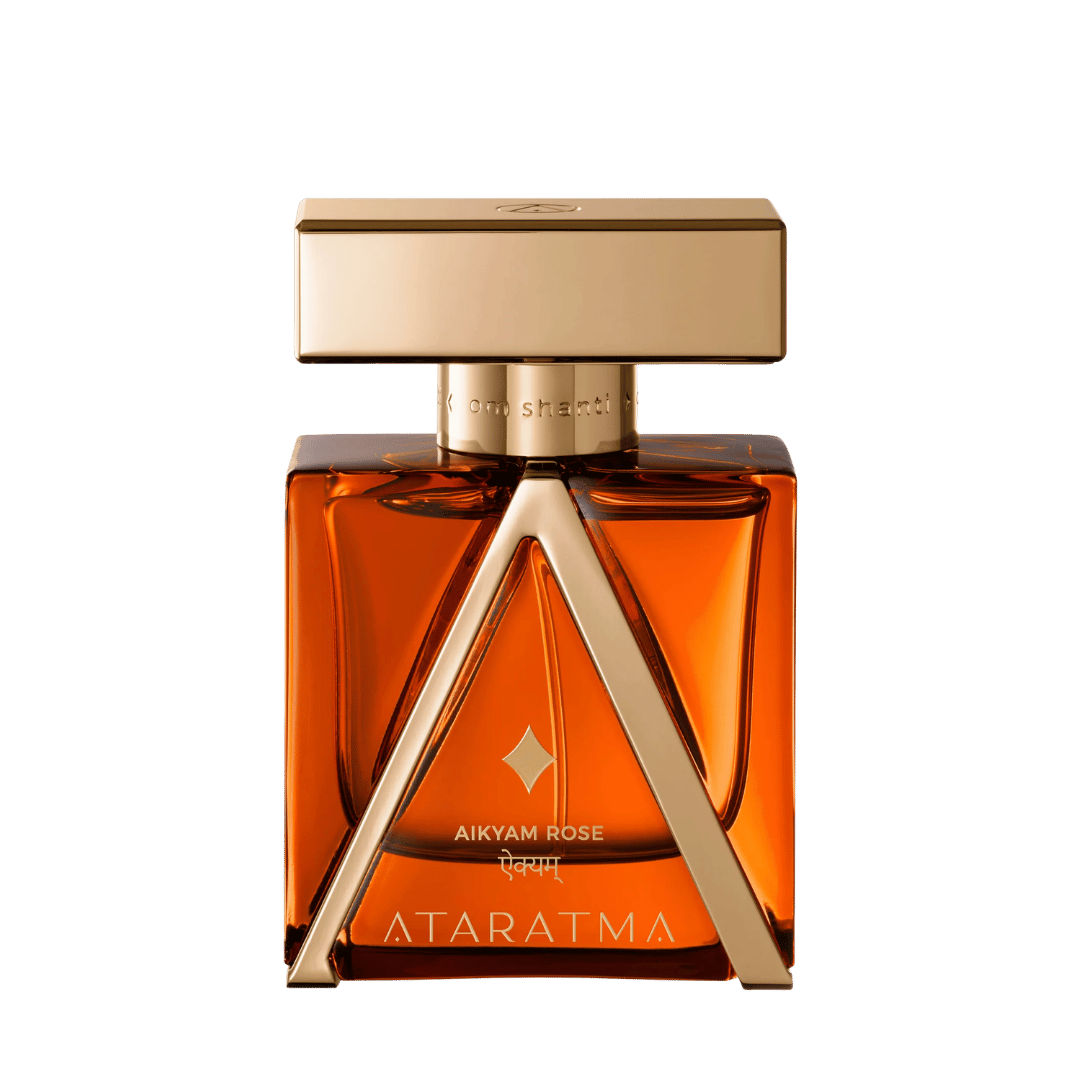
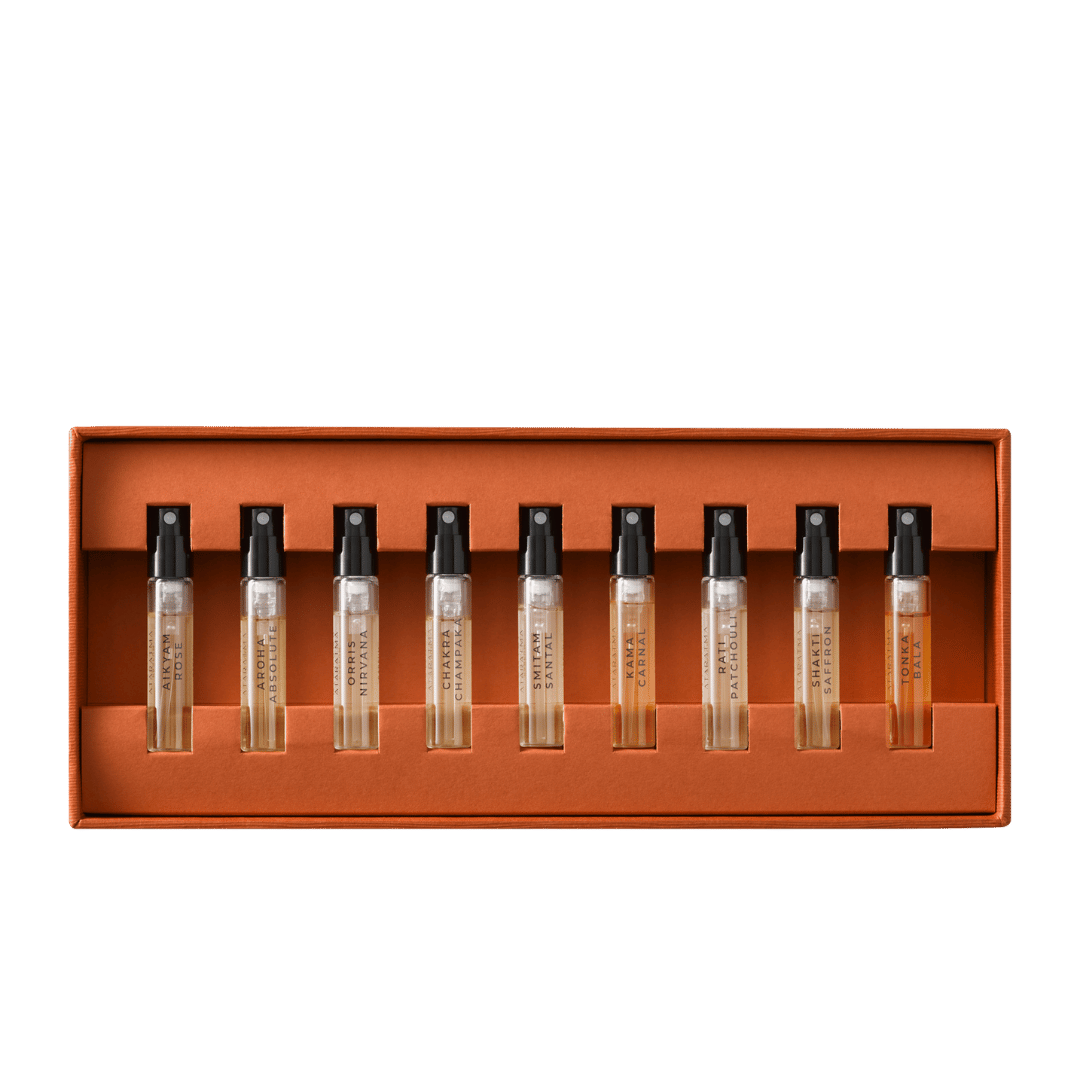
Nelly Hachem-Ruiz is known for a working method in which natural impressions and modern fragrance materials merge closely. Her compositions can be transparent and atmospheric, yet possess surprising depth. For ATARATMA, she worked on AIKYAM ROSE, KAMA CARNAL, and SHAKTI SAFFRON, among others.
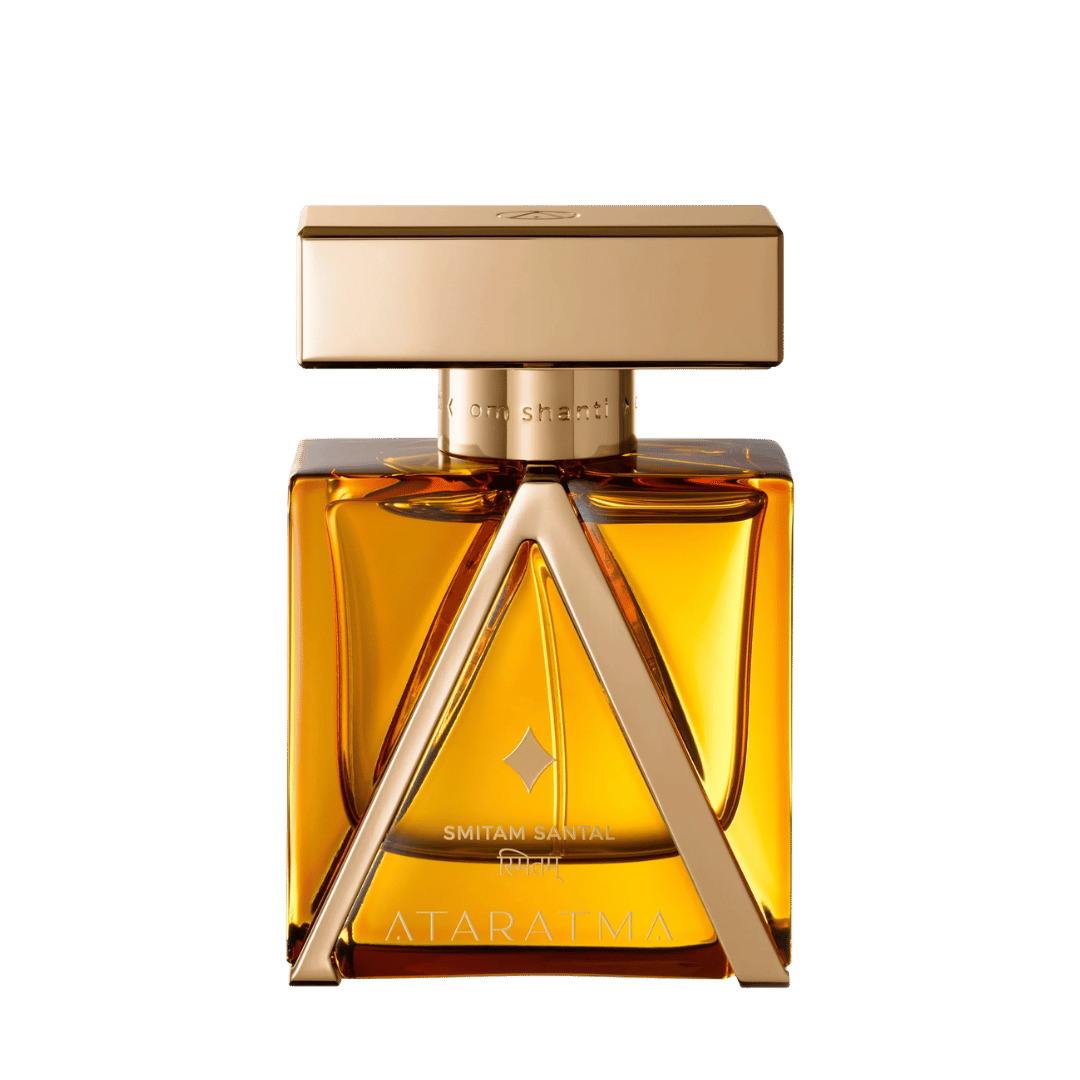
Caroline Dumur completed her training at the renowned ISIPCA and is now one of the experienced fine fragrance perfumers at IFF. Her works often thrive on contrasts: clarity meets sensuality, floral elegance meets structural depth. In ATARATMA, this signature is evident, for example, in CHAKRA CHAMPAKA and SMITAM SANTAL.
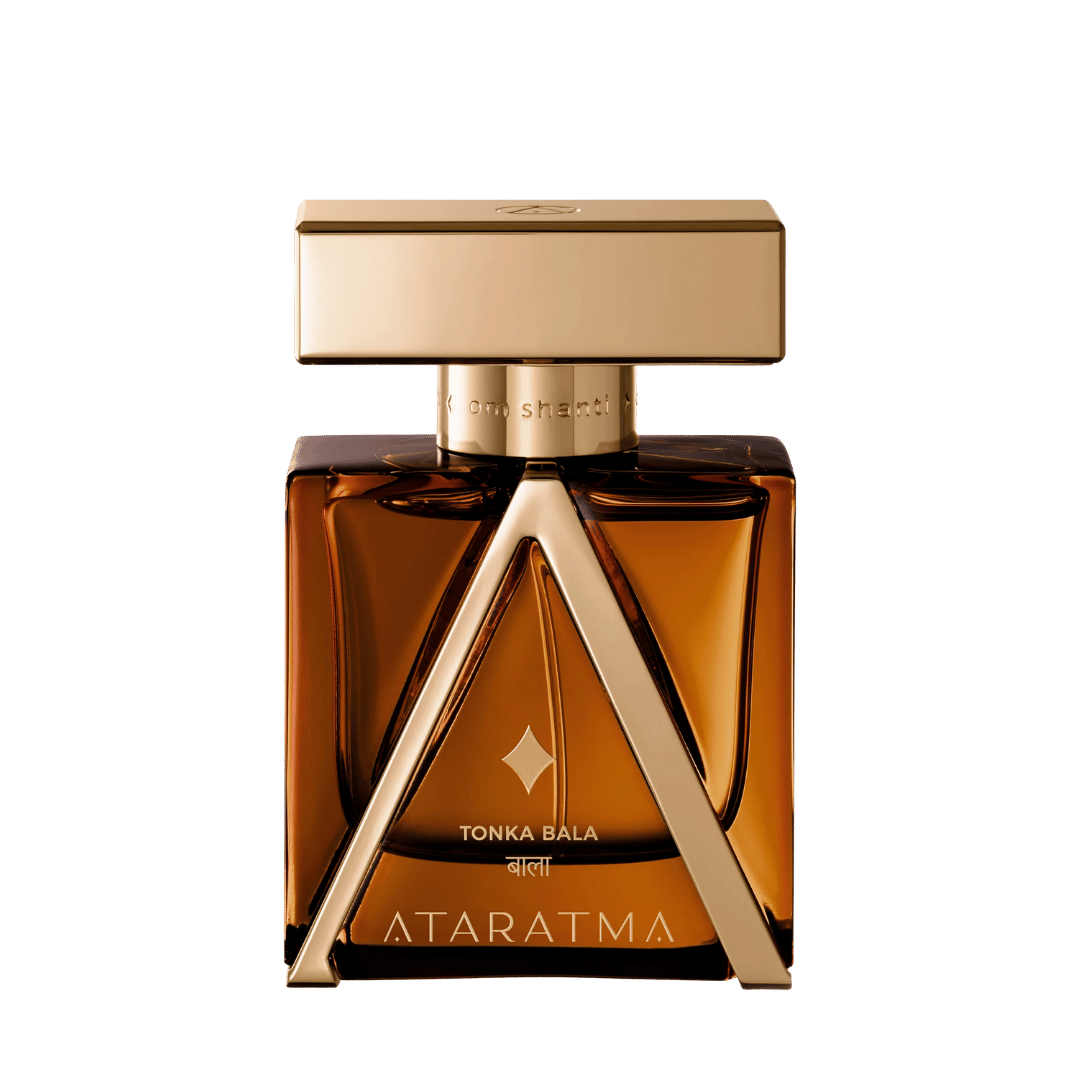
Fanny Bal belongs to a new generation of French perfumers who effortlessly combine natural raw materials with modern fragrance chemistry. Her compositions often possess structure and volume without appearing overloaded. For ATARATMA, she developed TONKA BALA, among others.
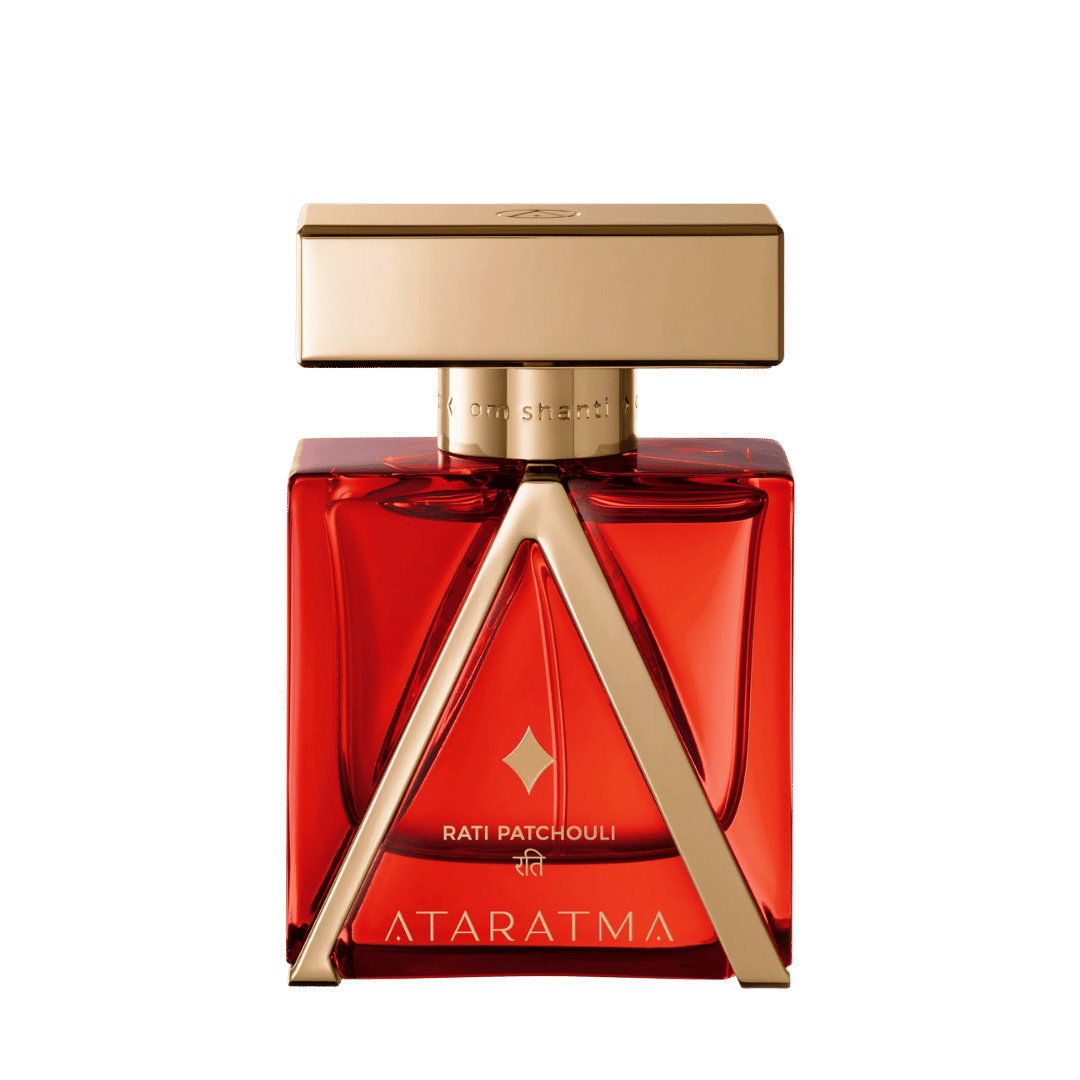
Tanguy Guesnet, in turn, brings another form of precision to the house. Particularly in RATI PATCHOULI, it becomes clear how differentiated a classic natural material like patchouli can be used today: not just dark and earthy, but cleaner, woodier, more elegant, and much more multifaceted.
Paul Guerlain – a big name, but not borrowed glory
Of particular interest, of course, is Paul Guerlain. The name has an almost mythical ring in the history of perfumery. Paul Guerlain is a grandson of Jean-Paul Guerlain, the last family perfumer of the historic Maison Guerlain and creator of significant classics such as Vétiver, Habit Rouge, Chamade, and Samsara.
But Paul Guerlain doesn't simply work in the shadow of this name. He has forged his own path and works as a perfumer at IFF. There, he further developed his signature independently of the historic Maison Guerlain and worked on projects for various international luxury and niche brands.
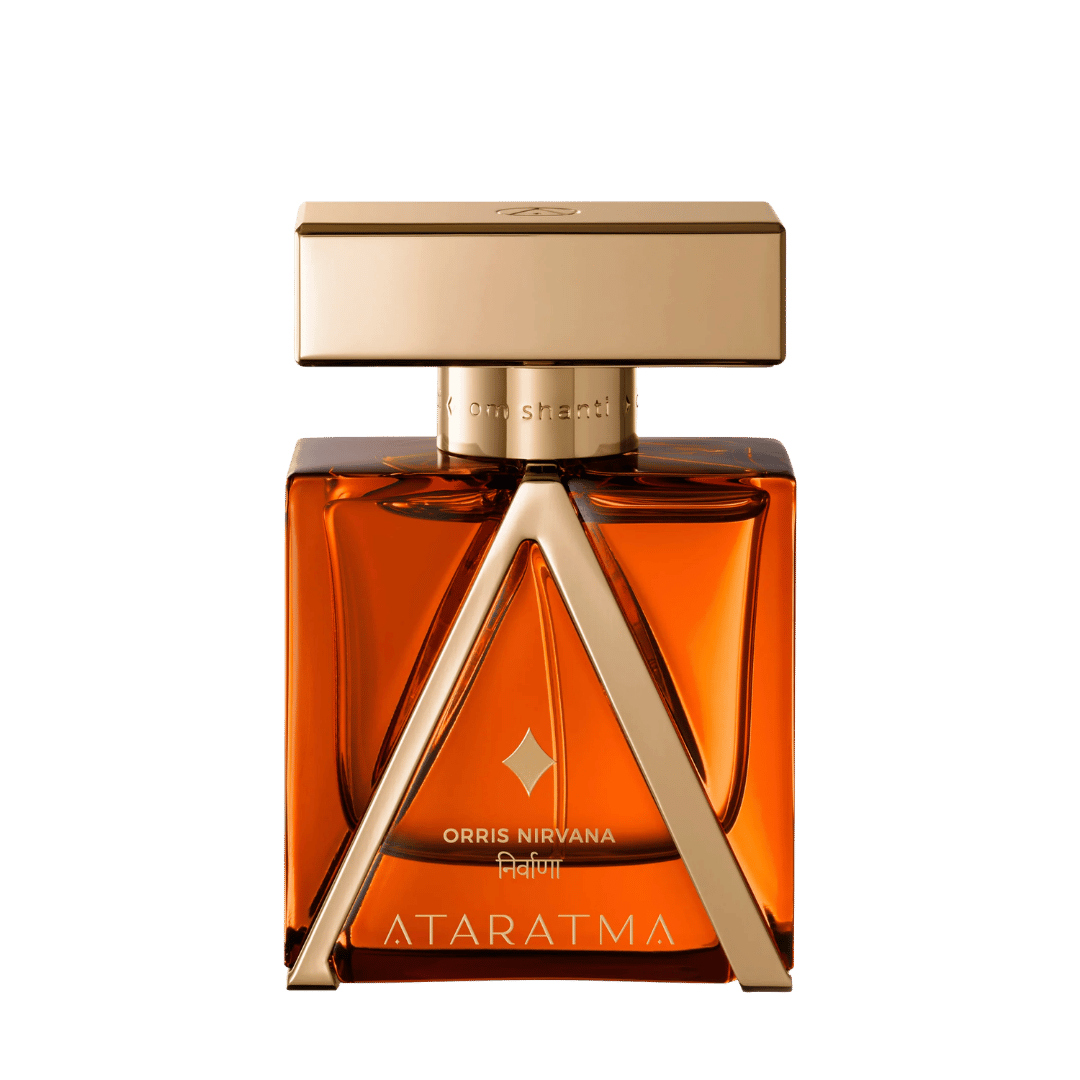
This is precisely what makes his involvement with ATARATMA exciting. Here, one of France's most traditional perfumer families meets a young British-Indian brand that seeks its own place in modern niche perfumery. In ORRIS NIRVANA, this connection is particularly evident: iris, leather, patchouli, sandalwood, and musk are not simply combined into a classic iris composition, but into a fragrance image of calm, inner detachment, and contemplative depth.
True luxury begins long before the finished perfume
One of the most interesting peculiarities of ATARATMA lies in its work with high-quality natural materials from LMR Naturals by IFF. And this is precisely where it's worth looking closer, because "high-quality raw materials" has become a frequently used term in the perfume world – but rarely is it explained what that actually means.
The original Laboratoire Monique Rémy, or LMR for short, was founded in Grasse in 1983. Today, LMR belongs to IFF and is one of the most renowned specialists for natural fragrance raw materials within international haute parfumerie.
The crucial difference is not just about using rare plants. Quality begins much earlier: with the origin, cultivation, harvest, and how a raw material is subsequently processed.
Jasmine is not simply jasmine – and patchouli is not simply patchouli
With natural fragrances, the name of the raw material alone says astonishingly little about its actual quality. A jasmine can appear radiantly floral, green, fruity, creamy, animalic, or almost narcotic. A vetiver can appear dry, smoky, green, rooty, nutty, or mineral. Patchouli can smell dark, moist, and camphor-like – but also clear, woody, soft, and surprisingly elegant.
The reason lies in nature itself. Soil, climate, origin, plant variety, precipitation, ripeness, and harvest time influence the later fragrance profile. Even plants of the same botanical species can differ significantly in their olfactive profile depending on the region and processing.
This can be compared to wine: no one would claim that every grape of the same variety automatically tastes the same. Terroir, vintage, aging, and processing change the result. It's no different with high-quality natural raw materials for perfume.
This is precisely one of the strengths of LMR Naturals. The company works closely with producers, farmers, and specialized cooperatives for many materials. This allows quality to be controlled across various stages – from cultivation to harvest to the actual extraction.

Traceability is more than a sustainability buzzword
For sophisticated perfumery, traceability is crucial for two reasons. Firstly, it allows for better control of raw material quality. Secondly, it creates transparency about where a material comes from and under what conditions it was produced.
Natural materials are not entirely standardized. A particularly dry summer, unusual precipitation, or changes during harvest can shift fragrance profiles. Those who work long-term with producers and know the origin of a material can understand and manage such fluctuations much better.
This close connection between field, processing, and perfumery laboratory distinguishes high-quality natural ingredient production from anonymously purchased raw materials. The perfumer doesn't just receive "vetiver" or "jasmine," but a material with a clear origin and a precisely known olfactive profile.

In Grasse, the second refinement of nature begins
But even a perfect plant doesn't automatically yield an extraordinary perfume raw material. After harvest, processing determines which aromatic components will actually become evident in the fragrance.
In addition to classic methods like distillation or solvent extraction, modern natural material processing uses techniques such as fractionation, molecular distillation, and CO₂ extraction. The goal is not to falsify nature, but to make it more precisely usable.
Some components of a natural material can be particularly heavy, aggressive, or technically disruptive. Others, however, possess precisely the elegant, transparent, or characteristic quality that a perfumer seeks. Modern separation techniques allow certain fractions of a natural material to be isolated more selectively or undesirable areas to be reduced.
This enormously expands the perfumer's palette. From a single plant, different raw material qualities can emerge, each showing a different facet of the same natural identity.
Heart and Coeur – when a raw material yields its most elegant core
A particularly good example are so-called Heart or Coeur qualities. These are created by targeted fractionation of a natural starting material. This concentrates particularly desired components of the fragrance profile, while rougher or less suitable facets are reduced.
A Patchouli Heart remains patchouli. But it can smell different from a classic patchouli essential oil. Heavy, camphoraceous, or musty-earthy nuances can be toned down, while woody, warm, slightly fruity, and elegant aspects emerge more strongly.
This is precisely why a designation like Patchouli Heart No. 3, as used in ATARATMA RATI PATCHOULI, is not simply a nice-sounding marketing term. It refers to a very specific processing and selection within the natural material.
For the perfumer, this means more control. Patchouli doesn't necessarily have to smell like a dark cellar, damp earth, or 1970s bohemia. It can appear transparent, modern, soft, and almost polished, without losing its natural identity.
High-quality raw materials don't have to smell louder
Perhaps the biggest misconception about expensive natural materials is: the higher the quality of a raw material, the more intense it must smell.
That's not quite right.
Quality often manifests not in loudness, but in nuances, texture, development, and depth. An outstanding jasmine can add volume to a fragrance without smelling dominantly of jasmine. A high-quality vetiver can give a composition dryness and structure without pushing itself to the forefront as a single note. A precisely processed patchouli can carry the entire base of a perfume while remaining surprisingly transparent.
It is precisely this complexity that makes high-quality perfume raw materials exciting. They don't just deliver a scent, but a whole spectrum of impressions. In a sophisticated composition, they can change over hours and reveal different facets.
Nature and modern molecules – great perfumery needs both
Especially in the world of niche fragrances, it is often suggested that one must choose between natural and synthetic fragrance materials. Natural materials are presented as inherently high-quality, while synthetic molecules are almost seen as a compromise.
This idea does not do justice to modern perfumery.
A natural material can consist of hundreds of aromatically relevant molecules and thus possess enormous complexity. Modern fragrance molecules, in turn, enable transparency, diffusion, longevity, structure, or effects that cannot be achieved with natural materials alone.
The crucial question is therefore not: natural or synthetic? But rather: How well does the perfumer understand both worlds and how intelligently does he combine them?
Precisely at this point, ATARATMA benefits from the connection between LMR Naturals, the technological competence of IFF, and the different creative signatures of its perfumers. Traditional materials such as sandalwood, patchouli, jasmine, neroli, ylang-ylang, saffron, vetiver, resins, and spices can thus be reinterpreted without losing their cultural and olfactive origin.
25 to 30 percent concentration – but no competition for maximum loudness
The fragrances of ATARATMA fall into the category of Extrait de Parfum with concentrations of about 25 to 30 percent fragrance oil. Nevertheless, the brand does not automatically interpret high concentration as an invitation to maximum projection.
This is an important distinction. Especially in today's niche market, performance is often confused with loudness: as much sillage as possible, as extreme longevity as possible, as immediate an impact as possible. ATARATMA pursues a more subtle idea. The fragrances are intended to be long-lasting and present, but rather to envelop the skin as an intense aura.
The fragrance oils are hand-mixed in the atelier in Grasse. Subsequently, the perfumes are further processed, macerated, and bottled in Dorset. As a base, the brand uses naturally fermented alcohol from sustainably grown French sugar beets. The perfumes are vegan and cruelty-free and are produced without added colorants, parabens, and phthalates. Even in its packaging, ATARATMA strives to combine luxury with a more conscious approach to resources.
Luxury reveals itself where one looks closer
In the end, it is not a single ingredient that determines whether a niche perfume is exceptional. An expensive natural material does not guarantee a great fragrance. Nor does a high concentration automatically make a better perfume.
What matters is the interplay of idea, material, and perfumer.
This is precisely why ATARATMA LONDON is interesting for scent amor. The brand possesses strong cultural inspiration without turning it into a superficial show. It works with internationally experienced perfumers, relies on high-quality LMR Naturals from IFF, and gives classic raw materials enough space to reappear in contemporary compositions.
For Georg R. Wuchsa as curator of scent amor, this represents a quality that is becoming increasingly important in the ever-more confusing niche perfumery market: a good fragrance doesn't have to please everyone, and it doesn't have to make a maximum impression within a few seconds. It should have its own signature, develop, and still be able to tell a story hours later.
ATARATMA at scent amor – not just smelling, but experiencing on the skin

The ATARATMA Extrait de Parfums are designed as modern unisex niche fragrances and do not adhere to rigid categories such as niche fragrance for women or niche fragrance for men. What matters is how a fragrance performs on one's own skin, which facets develop, and what emotional connection is created.
Especially with compositions featuring high-quality natural materials, this can hardly be judged on a paper strip within five minutes. A Discovery Set, individual samples, or decants provide the opportunity to wear the fragrances at leisure for several hours and get to know different facets.
Discover the extraordinary ATARATMA Extrait de Parfums at scent amor, your curated online shop for niche fragrances in Germany. A collection for people who seek not just an effect in a niche perfume, but raw material quality, artisanal depth, and an idea that goes beyond the first impression.
Copyright by scent amor © 2026 (grw)
Further articles in the scent news blog by scent amor:

An Invisible Path to the Soul: Fragrances for Inner Balance
Niche perfume can steady your inner balance with bright citrus, focused woods, and skin-close musk. Learn why the limbic system reacts so fast to scent. Simple rituals and mindful layering turn fra...

Leave a comment
All comments are moderated before being published.