

When 123 Million Euros in Revenue Barely Yields Any Profit – And the Very One Who Warns Against Discount Battles Is Also Participating in Them
Perfume thrives on emotions, desirability, and the promise of luxury. Brands tell tales of rare raw materials, masterful perfumery, tradition, and creative freedom. In retail, however, this often translates into a much simpler message: 20 percent off. Beauty Days. VIP promotions. Black Week.
What was once sales promotion has long become a system in parts of the perfumery trade. Customers have learned to wait, retailers have learned to generate foot traffic with percentage signs, and brands then wonder why the regular price is taken less and less seriously.
Following our first article "How cheap can perfume be?", this time the trail leads to a much larger company: Parfümerie Pieper, founded in 1931 and for decades Germany's largest owner-managed perfumery chain. More than 100 branches, an established online shop, a well-known name, and annual revenues recently exceeding 120 million euros.
In November 2025, Pieper had to file for insolvency under self-administration. The company was restructured and subsequently fully acquired by the French entrepreneurial family Konckier. The simple story would be quickly told: traditional company in difficulties, investor found, company saved. The real story is more interesting – and significantly more uncomfortable.

123 Million Euros in Revenue – 183,000 Euros in Profit
In the 2022/23 financial year, Pieper generated approximately 126.6 million euros in revenue. The net profit was about 277,000 euros. In the following 2023/24 financial year, revenue was still around 123.1 million euros, but net profit dropped to only about 183,000 euros.
In other words: out of 100 euros in revenue, approximately 15 cents of profit remained.
123 million euros in revenue looks impressive. 183,000 euros in profit much less so. This clearly shows why revenue in retail is often celebrated, but only tells half the story. What matters is what remains after cost of goods sold, personnel, rent, energy, logistics, IT, advertising, payment fees, and financing.
As of June 30, 2024, inventory stood at approximately 31 million euros. At the same time, liabilities to credit institutions had risen to nearly 24.7 million euros. For a large retail chain, high inventory levels are not unusual. However, goods have an annoying characteristic: as long as they are on the shelf, they don't pay any bills.
And it is precisely at this point that the big percentage sign suddenly becomes attractive.
Pieper Knew the Problem Itself
The story becomes particularly interesting due to Pieper's own assessment of the market. In its management report, the company explicitly described online business as less profitable. At the same time, Pieper referred to declining customer frequencies, high rents, changed consumer behavior, and rising financing costs.
And then there is that one sentence that, in retrospect, tells almost the entire story: Pieper itself warned against the "discount battles of some market participants" in online retail.
So they knew exactly what was happening.
Pieper had recognized that aggressive price competition could damage profitability. They knew that additional online revenue was not automatically good revenue. And they even wanted to create a better margin structure with selective distribution.
But at the same time, they participated in the very game they warned against.
20 percent here, Beauty Days there, VIP promotions, and sometimes up to 25 percent off fragrances. Of course, there were exclusions, and of course, not all brands were affected. Nevertheless, customers mostly remembered one message:
It pays to wait.
It is precisely this contradiction that makes Pieper so interesting. Not because Pieper was particularly reckless, but because even a company of this size apparently had difficulty escaping a system it had long recognized as dangerous.
Welcome to the Discount Hamster Wheel
The mechanism is simple. One competitor offers 20 percent. The next retailer follows suit because they don't want to lose sales. Another adds a voucher. Then come Beauty Days, Black Week, and the strictly exclusive VIP promotion, to which almost everyone whose email address is stored somewhere is invited.
Eventually, the customer waits.
Why pay 150 euros for a fragrance today, when the same bottle will probably be offered for 120 euros next week?

This shifts the perceived normal price. 150 euros suddenly become "too expensive," while 120 euros become the appropriate price. The industry has partly educated its customers to the very price sensitivity it then so readily complains about.
You can't teach customers for years to wait for 20 percent off, and then be indignant when they actually wait.
20 Percent Discount Is Not 20 Percent Less Profit
Added to this is a business economic effect that is often underestimated. A 20 percent discount does not automatically mean 20 percent less profit. The loss in gross profit can be significantly greater.
A simplified example: A product costs 100 euros including VAT. Net, the retailer retains about 84 euros in revenue. If their cost of goods sold is 50 euros, approximately 34 euros of gross profit remain.
Now the retailer gives a 20 percent discount. The customer pays 80 euros, net remains about 67 euros. The cost of goods sold is still 50 euros. 34 euros of gross profit become approximately 17 euros.
The customer saves 20 percent.
In this simplified example, the retailer has lost approximately half of its gross profit.
The supposed solution is: sell more. And that works wonderfully for a while. More orders, more packages, more revenue. Unfortunately, these additional goods must first be purchased, financed, stored, picked, and shipped. The hamster wheel spins faster and faster – only for perhaps just as little to remain at the end as before.
Pieper's figures do not prove that discount campaigns caused the insolvency. That would be too simple. But they show how little room for maneuver a company with a net margin of about 0.15 percent still has.
Then Came Pieper's Insolvency
On November 20, 2025, Pieper filed for insolvency under self-administration. Operations continued, branches and the online shop remained open. As part of the restructuring, the branch network was reviewed, several unprofitable locations were closed, and an investor process was initiated.
Pieper survived the insolvency. Approximately 115 branches and the vast majority of jobs could be preserved.
But Pieper did not survive unchanged.
After approximately 95 years, Pieper thus ceased to be a family business. The name remained, most branches remained – the owners did not.
The French Buyer Konckier Knows the Problems Themselves
The Konckiers are not financial investors from outside the industry. The family controls the French Bogart Group, which owns its own perfume and cosmetics brands and simultaneously operates a European beauty retail network. The portfolio includes Carven, Jacques Bogart, Ted Lapidus, Stendhal, and Méthode Jeanne Piaubert, among others.

Strategically, Pieper is therefore an excellent fit. Whoever owns their own brands, produces, and at the same time controls distribution, can keep a larger part of the value creation within their own sphere of influence. For this, Pieper brings one main thing: direct access to German customers.
Only here immediately lies the next contradiction.
Even Bogart itself was by no means a model of boundless profitability recently. In 2025, revenue fell from approximately 288.8 to 264.1 million euros. Operating income slipped into the red, resulting in a consolidated loss of approximately 22.6 million euros. At the same time, about 30 unprofitable branches in France, Germany, and Belgium were closed.
So here, the perfectly healthy retailer doesn't simply rescue the failing retailer. Rather, a large beauty group or its owning family relies on consolidation, purchasing power, own brands, and stronger control over distribution – apparently precisely because classic perfumery retail has become more difficult on many levels.
And Then Marionnaud Appears
Just five days after the completion of the Pieper acquisition, the next remarkable news followed. On July 6, 2026, it was announced that David Konckier personally had entered into exclusive talks about a possible acquisition of Marionnaud.

Marionnaud operates more than 700 branches in Europe. As of early September 2026, this transaction has not yet been completed. But the direction is clear: the European perfumery trade is consolidating. Large groups are getting larger, while independent retailers are increasingly coming under pressure.
This can create efficiency. But it also creates power.
When the Margin is Missing, the Pressure Shifts
Large retailers can demand better purchasing conditions, negotiate longer payment terms, request marketing subsidies, and have promotions partially co-financed by suppliers. The more important a retailer becomes for a brand, the more difficult it becomes for that brand to reject demands.
So the margin pressure doesn't disappear. It moves on.
First, the retailer offers a discount. Then they try to get some of it back from the supplier. The distributor should grant better terms, the brand should contribute marketing money, the manufacturer should accept longer payment terms.
This is how the discount battle eats its way through the entire value chain.
And the Brand Also Loses
For a perfume brand, permanent discounting is particularly dangerous. A fragrance cannot be continuously presented as an exclusive artwork with precious raw materials, great creativity, and artisanal skill, and at the same time appear every few weeks under a red –20 % without its perception changing.
At some point, the customer quite rightly asks:
What is this fragrance actually worth?
200 euros? 160 euros? Or 140 euros if I wait a little longer?
This makes the regular price lose its credibility. The discount price becomes the actual reference price.
Especially in niche perfumery, this contradiction is particularly striking. Brands speak of selectivity and exclusivity, but at the same time want more and more points of sale and increasing sales. But true selectivity doesn't work by sending a selective contract to as many retailers as possible.
If thirty or fifty shops offer the same fragrance, customers are eventually left with a very simple comparison criterion:
Who is cheaper?
The Independent Specialist Retailer Often Pays the Highest Price
Small and medium-sized perfumeries have neither the purchasing power nor the marketing budgets of large groups. However, they often offer personal advice, carefully curated assortments, and the willingness to explain and build up unknown brands in the first place.
The problem begins when a customer receives extensive advice there and then orders the same fragrance where a 20 percent discount is currently being offered again.
The specialist retailer bears the consultation costs. The discount provider makes the sales. The brand is initially happy about the bottle sold.
However, this model cannot work in the long term. If independent perfumeries disappear, often precisely those places where new brands are discovered and built up also disappear.
Discount Is Not the Problem – Dependence on It Is
Of course, retail is allowed to discount. Residual stock, assortment changes, discontinued items, and seasonal promotions are part of the business. It becomes problematic when the customer no longer accepts the normal price and the retailer fears losing sales without a promotion.
Then discount is no longer sales promotion. Then it is a prerequisite for sale.
This is precisely why Pieper's own warning about the "discount battles of some market participants" is so revealing. The company had recognized the mechanism and yet participated in it.
Perhaps this is the strongest indication of how deep the problem now runs.
So How Cheap Can Perfume Be?
Perhaps the question now needs to be asked differently:
How cheap can perfume be before someone else pays the bill for it?
Because someone always pays. First the retailer with their margin. Then the supplier with better terms. The brand with the credibility of its price. Employees with increasing cost pressure. Small retailers possibly with their existence.
And eventually, the customer also pays – not today, because today they are happy about their 20 percent. But in the long term, perhaps with fewer independent perfumeries, less advice, less variety, and a market controlled by fewer and fewer large groups.
Pieper survived its insolvency. That is good news for employees, customers, and suppliers. But after approximately 95 years, the company no longer belongs to the Pieper family.
Perhaps this is the most sobering footnote to this story:
You can buy revenue with discounts. You can buy market shares with discounts. And you can buy customers short-term with discounts.
What cannot be permanently discounted is economic substance.
Someone pays the bill. And eventually, it's due.

A personal word at the end
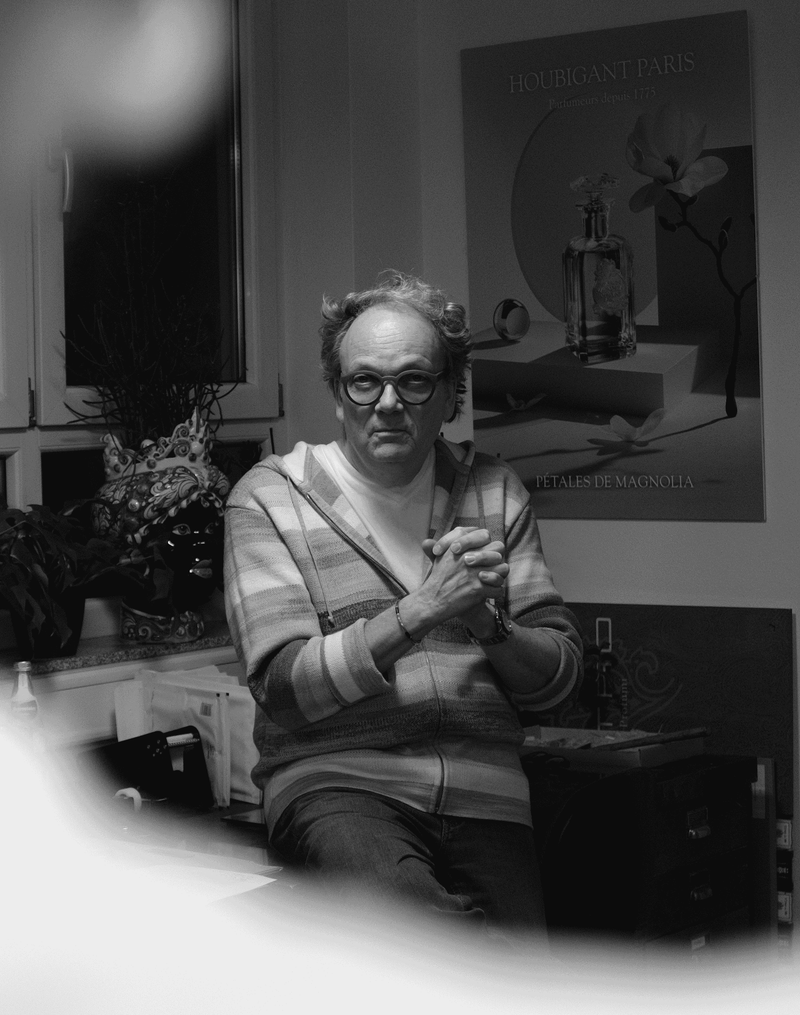
For me, this story also has a personal side. Dr. Oliver Pieper and I met many years ago, long before scent amor came into being. At that time, it was about my former company Aus Liebe zum Duft. Oliver Pieper had at that time considered the possibility of taking over the company, and we met personally to discuss it. Ultimately, an acquisition did not materialize. As far as I remember today, his father Gerd Pieper's rather reserved attitude also played a role. After so many years, however, I would like this to be understood explicitly as a personal memory and not as a proven fact.
Perhaps it is precisely this encounter that makes my view of today's developments a little more personal. After all, behind all the revenues, margins, branch closures, insolvency plans, and changes of ownership are people and entrepreneurial families. For over four generations and nearly 95 years, Pieper was an important part of German perfumery history, and Oliver Pieper ultimately faced the difficult task of leading this family business through its probably toughest phase and finally handing it over to new owners.
For all the criticism we level in this report at discount spirals, margin pressure, and misdevelopments in the perfumery trade, this criticism is therefore expressly not directed at him as a person. After the turbulence of recent years, we wish Dr. Oliver Pieper all the best for his personal and entrepreneurial journey. With his BRI Business Ruhm Immobilien GmbH, he remains entrepreneurially active. Perhaps, after the end of a nearly 95-year-old chapter, a new one is simply beginning.
And amidst all necessary critical examination, one thing must also be said: To build and continue a family history like Pieper's over four generations deserves respect – even if its final chapter ends differently than one had probably once imagined.
Copyright by scent amor © 2026 (grw)
More articles in the scent news blog by scent amor:

How cheap can perfume be? When discounts destroy the market – and ultimately others pay the price
High revenue does not automatically mean a healthy business. Permanent discounts can eat into margins, damage the price perception of brands, and put the entire perfumery retail sector under pressu...


Leave a comment
All comments are moderated before being published.