
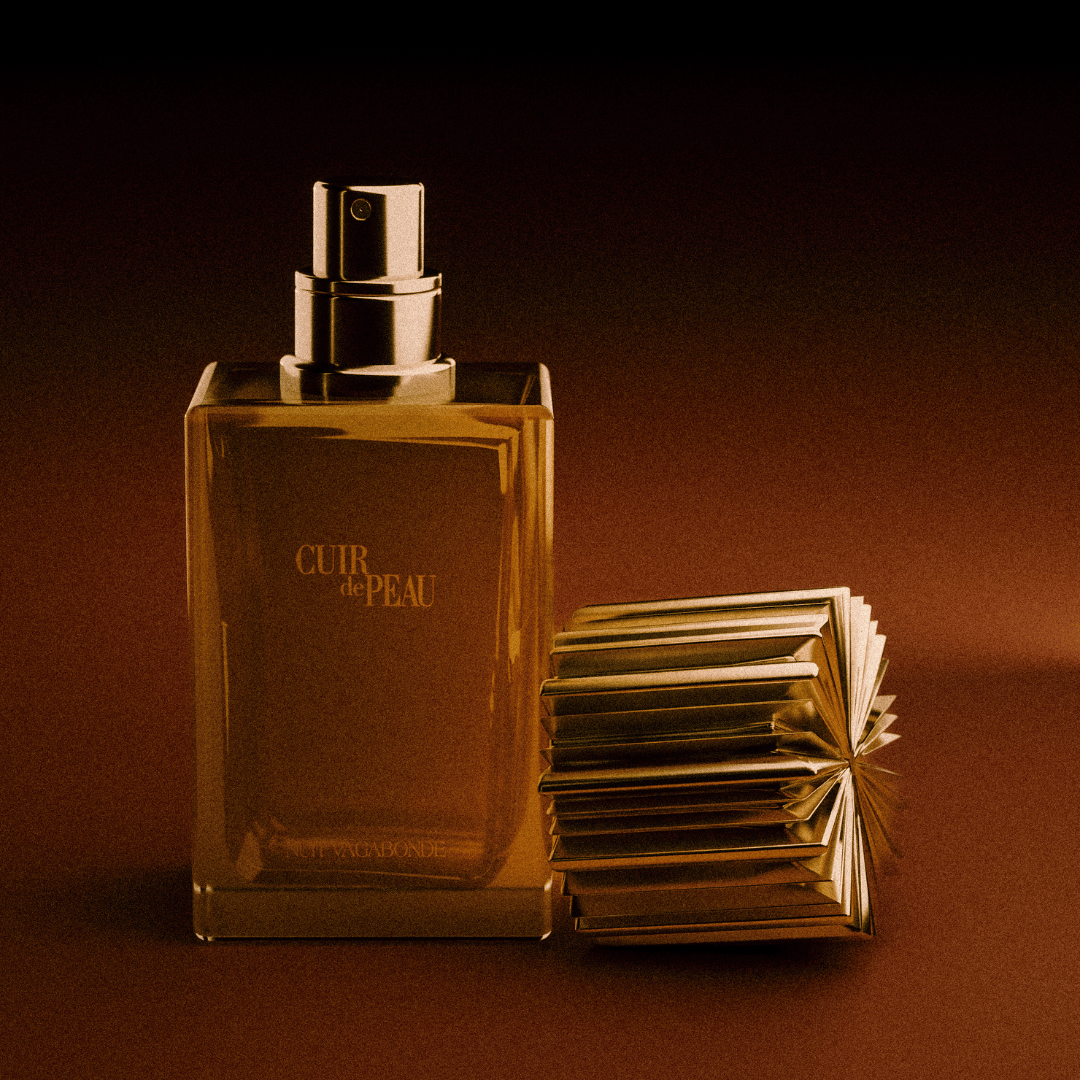

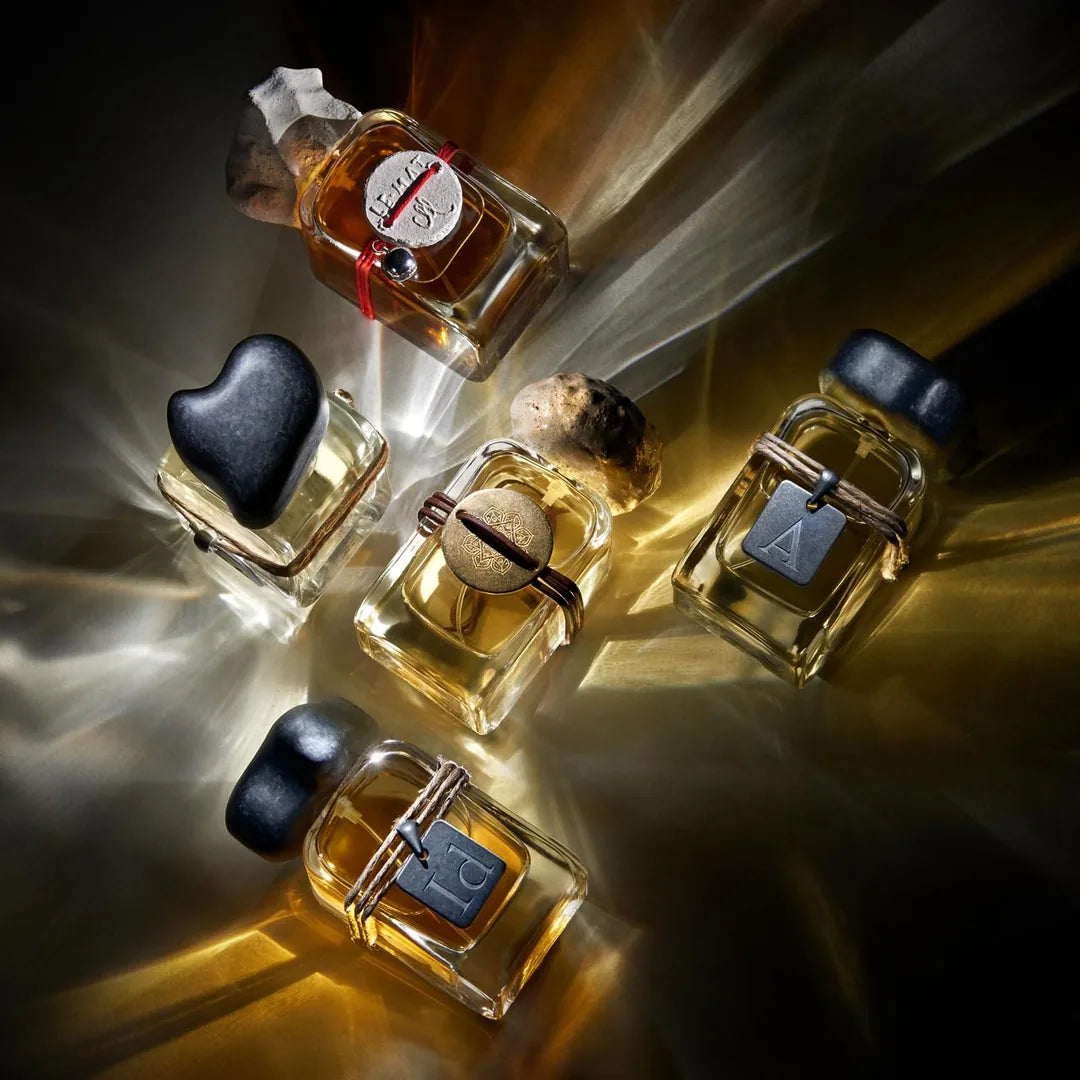


When niche fragrances still smelled like risk
There was a time when a niche fragrance wasn't just a pretty label for "more expensive than mainstream." It was a promise: someone putting everything into an idea, into craftsmanship, into a scent that didn't have to please, but told a story. Small studios, small teams, short lines of communication. You could reach the founder, you could ask questions, you could sense that someone was working with raw materials—not spreadsheets.
During those years, the scene was challenging. Some launches were daring to the point of being irrational, some formulas cumbersome, some bottles a bit too idiosyncratic. That's precisely why people fell in love with them. And that's exactly why the term "niche perfume" became a value in the first place: not because it appears luxurious, but because it operates according to a different logic.

The moment when attitude became a "segment".
At some point, what you love is reduced to a PowerPoint presentation. The language shifts: fragrance becomes "asset," composition becomes "SKU," handwriting becomes "brand DNA." It's then called growth, internationalization, professionalization. And yes, growth isn't inherently bad. But growth without taste, without humility before the product, without respect for the community, devours precisely what it thrives on.
The pattern is almost always similar. A small, lovingly cultivated brand produces exceptional fragrances , gains trust, and becomes coveted. Then comes the next biggest buyer: a distribution group, an investor, a corporation whose niche is still missing. Acquisition. After that come "synergies": raw materials are streamlined, batches are standardized, and rough edges are smoothed. On paper, the perfume remains the same—yet it smells different. Not dramatically different, just enough for connoisseurs to notice and newcomers to be unable to put their finger on it.
And then the second, even more bitter thing happens: the buyer is bought. Another layer added, another step further away from the origin. What was once a workshop becomes a portfolio. What was once love becomes profit. The fragrance is no longer made because someone is passionate about it, but because it has to "perform." And if it doesn't perform, it's replaced—not improved.

Why love so often disappears after a takeover
Because love takes time. And in large organizations, time isn't a romantic commodity, but a budget item. You can't simultaneously let a fragrance idea slowly mature and provide quarterly justifications. You can't cultivate a signature style and deliver "more new products" every year because the pipeline demands it. You can't simultaneously formulate uncompromisingly and raise the margin on command when raw material prices rise.
This is the point where fragrance becomes "practical." It acquires a new kind of cleanliness, a new kind of pleasingness. You can often recognize it by a kind of synthetic comfort blanket: Cashmeran here, Iso E Super there—not as a clever trick, but as a shortcut. This can be used brilliantly when it serves the idea. It becomes unpleasant when it merely replaces the idea.
And that brings us to the sad truth: In many large organizations, there's ultimately no one who truly loves perfume. There's competence, yes – but often competence in administration, not in feeling. People who want to sell fragrances today, adjust parameters tomorrow, and the day after that, whatever seems "strategic" at the moment. Not because they're monsters, but because they have to function interchangeably. And when people are made interchangeable within a system, eventually, so will the products.
Arrogance in the supply chain: "We only supply brick-and-mortar stores"
Now to the sentence that sounds so harmless yet reveals so much: "We only supply you if you have a physical store." Please really think about that carefully.
What does this sentence actually say? It doesn't say, "We're protecting the brand." It says, "We don't trust you." It says, " We consider online second-rate – even though customers have long been using it to research, compare, and buy ." It says, "We want control, not partnership." And above all, it says, "We're still living in the past because the past seems more convenient."
That's not just arrogant, it's short-sighted. A well-curated online environment can tell a brand story more precisely than many a store with dusty shelves. A good e-commerce team can structure consulting, samples, storytelling, and service in a way that serves the brand—not harms it. If you, as a supplier, categorically exclude online sales, you're not making yourself elitist, you're making yourself blind.

And one more thing: People who speak like that often confuse "traditional" with "reputable." Yet everyone in this industry knows the counterexamples. There are shops that exist only as an address. And there are online retailers that curate with genuine expertise, explain products, offer tastings, and provide guidance. Reputable isn't about the rent. Reputable is about the attitude .
The real tragedy: The market grew large, but not matured.
The last 25 years haven't just allowed the niche market to grow, they've also distorted it. What was once a rebellious counterpoint to the mainstream has become a second stage for the same mechanics: hype, drops, limited editions, rapid consumption. And along the way, something has been lost: slowness. The opportunity to wear a fragrance multiple times, to understand it, to let it into your life.
When you talk about niche fragrances today, many people first talk about price, availability, and "performance." Hardly anyone addresses the question: What is this niche fragrance really trying to say? What is its signature style? What is the cultural context? Who is behind it – and what is its purpose?
That's precisely where curation comes in. Not as a marketing ploy, but as a sanctuary. When you consciously choose a unisex perfume , a distinctive niche fragrance , you're not just buying a liquid. You're buying an attitude. You're buying a willingness to embrace unconventional approaches. And you're buying – ideally – a small, irreplaceable team.
Why small niche fragrance brands still get "eaten up".
Because success in this industry often means visibility. And visibility attracts buyers. Many founders are artists, not strategists. They get tired. They struggle with cash flow, commodity crises, distribution, logistics, minimum order quantities. Then someone comes along and says, "We'll take that off your hands. We'll give you reach. We'll give you peace of mind." And yes, sometimes that's fair. Sometimes it saves a brand. But often it's the beginning of the end, because the price isn't just money, it's control.
And you can't manage an idea like inventory. You can only nurture it. When nurture is replaced by scaling, what you originally bought into dies: its uniqueness. Love becomes administration. Handwriting becomes a style guide. Risk becomes market research. And then, eventually, the brand is "healthy"—and the fragrance is dead.
What you can do as a lover, customer, dealer
You can look closely. You can ask questions. You can notice when a fragrance has become quieter, smoother, more generic. You can reward brands that remain transparent. You can't be blinded by the "niche" label, but rather convinced by the substance. And you can disagree with suppliers when they present you with outdated criteria.
If someone tells you that online retail isn't "real" commerce, ask them in return: What is "real" – a physical cash register or a relationship with the customer? What is "brand protection" – exclusion or education? What is "luxury" – a bouncer or a professional service with samples, advice, and follow-up?
Ultimately, a luxurious niche perfume isn't luxurious because it's hard to get. It's luxurious because someone had the courage to make it the way it should be: without soft focus, without using decorative sweetness as an excuse, honest, unembellished.
One final thought: The market has become sad – but not lost.

Yes, much of it is sad. Yes, some of it is cynical. Yes, there is managerial logic that squeezes every last drop of poetry out of a product. But there is also the opposite: small brands that cannot be bought, suppliers who understand partnership, retailers who don't just "sell" but tell stories.
And that's precisely where the hope lies: in insisting on quality. In saying no to arrogance. In saying yes to genuine expertise. And in deciding not to see buying niche perfume as a quick click, but as a commitment: to craftsmanship, to attitude, to a world that's about more than just sales figures.
Why scent amor and Georg R. Wuchsa consciously work differently
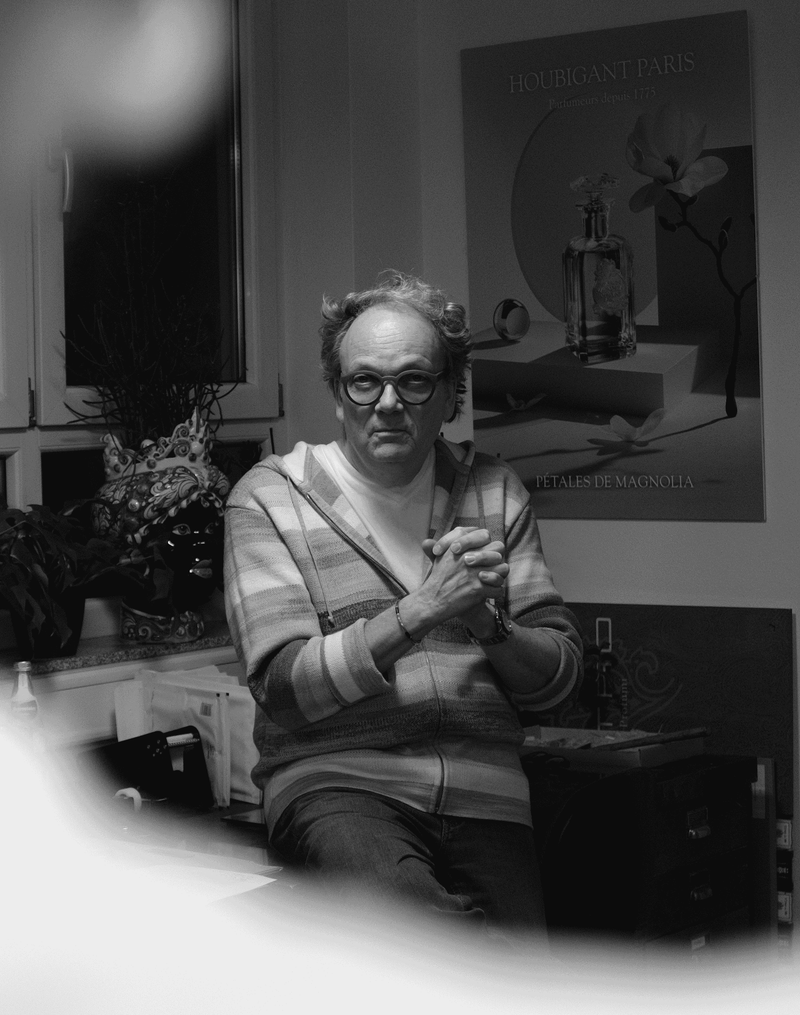
When the market has learned to standardize everything, curation is no longer a luxury, but a counter-movement. Scent Amor didn't emerge from a business plan, but from decades of lived experience with fragrance: smelling, comparing, discarding, rediscovering. Georg R. Wuchsa didn't "enter" this world because it's currently growing – he's been navigating it for decades, with a passion that isn't expressed in launch calendars, but in patience, discernment, and a clear vision of quality.

The difference begins where many stop: with the attitude. scent amor doesn't simply collect brands because they might be successful, but because they have something special. A niche fragrance collection here isn't a trophy cabinet, but a signature style. Every addition is a conscious yes – and every no is equally part of the curation process. You can feel it in the selection, in the tone, in the willingness to remain smaller but more cohesive. Not driven by the next hype, but sustained by genuine connoisseurship.
And then there's something else that's rarely found in corporate logic: responsibility for the experience. scent amor doesn't just think of fragrance as a product, but as an encounter. It's about the right timing, about context, about character, about how a fragrance lives on you – not just how it sells on paper. That's precisely why samples, consultation, and a curated approach are so integral: because a niche perfume shouldn't be "persuaded," but discovered.
Perhaps this is the subtle but crucial difference: While others tinker with markets, scent amor stays true to the essentials. It's about searching for the finest niche fragrances , for brands that still stand for something, for compositions that don't need to be polished to work. And yes, this is more demanding than simply "simply shopping." But it's also more honest. And it's precisely this kind of work that prevents fragrance from becoming a soulless commodity.
FAQ: Niche fragrances, acquisitions, and why curation matters
Question: What are niche fragrances – and why has this market changed so drastically in the last 25 years?
Answer: For a long time, a niche fragrance was a counter-concept: signature style, risk, raw material culture, character. Over time, it became a "segment" that attracts capital. As soon as niche fragrances are expected to be predictable, the logic shifts: less fragrance culture, more scaling, more key performance indicators, more uniformity.
Question: Why are small, lovingly built brands so often acquired?
Answer: Because success brings visibility – and visibility makes people desirable. Founders struggle with production, raw material prices, distribution, and minimum order quantities. Then a buyer with reach and money comes along. That sounds like relief, but it's often the moment when the brand loses control and the product suddenly has to work for growth, no longer for the idea.
Question: How can you tell that a fragrance has become "different" after a takeover?
Answer: Usually not as a shock, but as a gradual smoothing. The fragrance seems cleaner, more conventional, shorter, less distinctive. It lacks edge, and development becomes easier. Reasons can include reformulations, changes in raw materials, new supply chains, or simply cost pressures. When a luxury niche perfume merely "performs" instead of telling a story, that's a typical warning sign.
Question: What does it mean when a supplier says: "We only supply brick-and-mortar stores"?
Answer: This is often not about trademark protection, but rather outdated thinking – and unfortunately, also a power reflex. A curated online environment can provide advice, samples, and context even more precisely than many a physical store with shelf space. What matters is not the address, but attitude, expertise, service, and consistency in brand management.
Question: What makes Scent Amor different – and how do you find your fragrance there?
Answer: Scent Amor focuses on selection, not quantity. For decades, Georg R. Wuchsa has lovingly searched for the finest niche fragrance collections and brought them together at Scent Amor in such a way that individual styles remain recognizable. You'll find your perfect fragrance through character and honest categorization – with samples and advice, so that a unisex , women's, or men's fragrance isn't forced upon you, but truly suits you.
Copyright by scent amor © 2026 (grw)
More articles on the scent news blog by scent amor:

FASCENT niche fragrances – young, colorful, uncomplicated: Perfume as everyday wear with attitude
FASCENT is the young, vibrant answer to niche fragrances that often seem too serious: uncomplicated, cheeky, wearable – yet precisely composed. You'll discover a niche perfume that's unisex and wor...


Leave a comment
All comments are moderated before being published.