



History of the niche fragrance scene – how resistance became a language
When scent was still resistance
The niche fragrance scene didn't emerge because someone found a market gap. It arose because too many fragrances eventually sounded the same, had the same effect, and disappeared just as quickly. The origin of this movement isn't a business plan, but a reflex: when everything smells pleasing, the desire for truth arises. You notice this the very first time you encounter a truly uncompromising niche fragrance : nothing is explained "for you," nothing is smoothed over, something is simply there – and you have to respond to it.
Before the term: Authorship instead of target group
Previously, it wasn't even a distinct term. There were simply houses that operated outside the mainstream of distribution, perfumers who were more interested in materials, structure, and individual style than in "wearability" in the sense of a fragrance that would be suitable for everyday life without causing conflict. This was often quieter, sometimes more radical, frequently more intimate. And because it was quieter, it remained for a long time within circles of discerning listeners: people who not only wear fragrance but also interpret it. In this way, perfume became a kind of literature – not for showing off, but for recognition.

The moment the scene recognizes itself
Then came the phase in which the scene found itself. Small shops became meeting places, forums became libraries, and later, social media became stages. Suddenly, there was a narrative: "niche" as a counterpoint. And with every narrative comes misunderstanding. Many considered niche to be "expensive," "rare," or "quirky." But that's just the surface. At its core, niche is a question of authorship. Who is speaking here? Is there a consistent attitude? Is there a risk that is consciously accepted? A true niche perfume can be pleasing—but it is never ingratiating. It can be bold—but never empty. It can be classic—but not out of convenience.
When niche becomes packaging
With growth came dilution. The market learned that "niche" sells well because it sounds like individuality. So countless brands emerged, adopting the look and language of the niche, but not its core message. You've probably smelled it yourself: fragrances that try to be manifestos, but are ultimately just pretty blends of notes. The scene became more crowded. Not automatically better. And this is precisely where the fascinating dynamic begins: the niche fragrance scene is now both more mature and more vulnerable than ever before, because it constantly clashes with its own core idea.
The new benchmark in 2026: Substance over effect

What many underestimate: Niche isn't a museum. It's a movement that constantly has to prove itself anew. In the past, simply being "different" was enough because the mainstream was so rigid. Today, "different" is a stylistic device, a pose, sometimes even a packaging strategy. That's why the benchmark is shifting. In 2026, it won't matter so much whether a fragrance is "unusual." What matters is whether it carries something. Whether it has an inner necessity. Whether it not only impresses you but transforms you. And if you're honest: That's precisely why you return to the niche – because there you repeatedly encounter that rare form of substance that doesn't beg for attention.
Time is the true luxury.
And then there's the quiet truth that hardly anyone talks about: The niche fragrance scene was never just about scent. It was always also a kind of counterculture against the fast pace of modern life. Against the idea that everything has to be understood instantly. A good fragrance needs time – on your skin, in your mind, in your memory. This time is the luxury today. Not the price on the bottle. Time is what the niche gives you back, if you allow it: a slower look at yourself.
Niche Perfume 2026 – Brands, Power, Fatigue and the Return to Seriousness

The big sorting: less new product, more existing work
2026 is a year of reckoning. You sense a kind of weariness in the scene—not as weakness, but as a defense against constant hype. There are too many releases, too many "drop" mechanics, too much noise about little substance. And at the same time, precisely from this arises a new hunger: for fragrances that don't function like content, but like works of art. That's the tipping point. The niche is losing patience with its own shadow.
The most important brands are those that don't compromise their principles.
The most important niche brands of 2026 aren't necessarily the loudest or the most photographed. They're the brands that don't lose their distinctive character to the algorithm. You can recognize them by the fact that they don't try to please everyone. They don't create a fragrance "for every target group." They build worlds. Some are opulent, some ascetic, some dark, some light—but they are consistent. And consistency has become the most valuable currency because it costs money: working more slowly, aiming for less appeal, taking more risks.
Unisex perfume: not a trend, but a logical consequence
What will also become apparent in 2026: The old categories are starting to crumble. "Women," "Men"—these are still powerful labels in marketing, but often too narrow olfactorily. Many of the most interesting new fragrances are deliberately conceived as unisex perfumes , not as a trend, but as a logical consequence: Scent is about mood, texture, memory—nothing else matters. Nevertheless, the reality remains: People continue to seek guidance, including through women's and men's fragrances , because they associate these with experiences. The smart brands don't play on this blatantly, but subtly. They offer you entry points without pinning you down.
Trends 2026: Dryness, texture, closeness to the skin

Trends in niche perfume in 2026 are less about musical notes and more about movement. You see a clear shift away from overly sweet overpowering fragrances towards dryness, structure, and closeness to the skin. This doesn't mean gourmand fragrances are disappearing—quite the opposite. But the best gourmands are no longer "dessert," but rather studies of materials. Vanilla becomes less creamy, more shadowy. Amber becomes less of a cozy blanket, more of a glowing core. Wood becomes not just "warm," but also dusty, splintery, and raw. This new seriousness doesn't make the fragrances unwearable—it makes them credible.
Maximalism as opera: grand, yet precise
Alongside this, there's a counter-movement: maximalist perfumes that deliberately exaggerate again—not as a carnival, but as opera. If a fragrance is going big, it's going all out: dense smoke, heavy resins, leather, animal warmth, musk as body, not as cleanliness. But here, too, the difference between art and noise is precision. In 2026, there's less forgiveness for sloppiness . Many buyers are more informed, more critical, quicker to spot flaws. "Niche" is no longer a license to do whatever you want, but a promise you have to keep.
Who decides what is important?
And then there's the question of power. Who decides what's "important"? It used to be boutique owners, collectors, small communities. Today, algorithms have a say. This brings reach—and distortion. Suddenly, fragrances don't become big because of their quality, but because of their "narrative appeal." A bottle has to be photogenic, a name has to be catchy, a fragrance has to be explainable in 15 seconds. It's precisely against this superficiality that a persistent core will emerge in 2026, saying: No. A fragrance isn't meant to sell quickly. A fragrance is meant to stay with you.
Why curation will no longer be a luxury in 2026
Looking at the scene from this perspective helps you understand why some brands will truly be "the most important" in 2026: not because of revenue, but because they provide guidance. They demonstrate how to maintain character in an overcrowded market. And that's precisely why curation will be more crucial than ever. Not "more choice," but better choice. Not the biggest catalog, but the clearest signature style. This is where you, as a reader of scent news, are not just a consumer, but part of a culture: your attention determines which kind of niche survives.
Between entry and collection – why niche fragrance is not a level, but an inner transformation

The first mistake: confusing niche with shock value.
If you're new to a niche fragrance, you often underestimate one thing: your sense of smell needs to be retrained. Not because you "don't know what you're doing," but because you've spent years learning that a scent has to appeal quickly. Designer perfumes are often constructed this way: a quick kick, a clear accord, instant approval. A niche fragrance for beginners isn't automatically "light," but above all, it's easy to understand. It gives you structure without being banal. It draws you in without overwhelming you. And it gives you space to discover it for yourself.
The classic mistake when getting started: You chase extremes because you think niche fashion has to shock. You buy something considered "wild" in the community, wear it once, feel like you're in costume—and then decide niche fashion isn't for you. In reality, it was just the order of things that was wrong. A good start is like a conversation: You don't begin with a life confession. You start with a sentence that sparks your curiosity. Then you delve deeper. Step by step. With samples. With repetition. With skin-to-skin contact.
Samples are mandatory: not nice, but necessary.
Here's an unromantic but crucial point: Samples aren't just "nice," they're essential. Your taste isn't formed by the first spray, but by how it develops. A fragrance that's "nice" after 20 minutes might be bland after 6 hours. A fragrance that seems harsh at first might later develop the exact kind of tranquility you were looking for. If you truly want to break into the niche market, you have to learn not to be ruled by first impressions. It's not complicated. It's just unfamiliar in a world that constantly offers instant gratification.
The inner shift: you no longer buy for applause.

And then, at some point, the shift happens: you stop buying based on "compliments." Not out of arrogance, but out of freedom. You realize that your fragrance is no longer about how you look to others, but about your inner state. That's the moment when niche perfume becomes something personal. You're no longer looking for "a" fragrance, you're looking for expression. And expression can be soft, but also edgy. It can be perceived as a men's fragrance or a women's fragrance —but for you, above all, it is: authentic.
A niche fragrance for collectors: a library instead of a trophy.
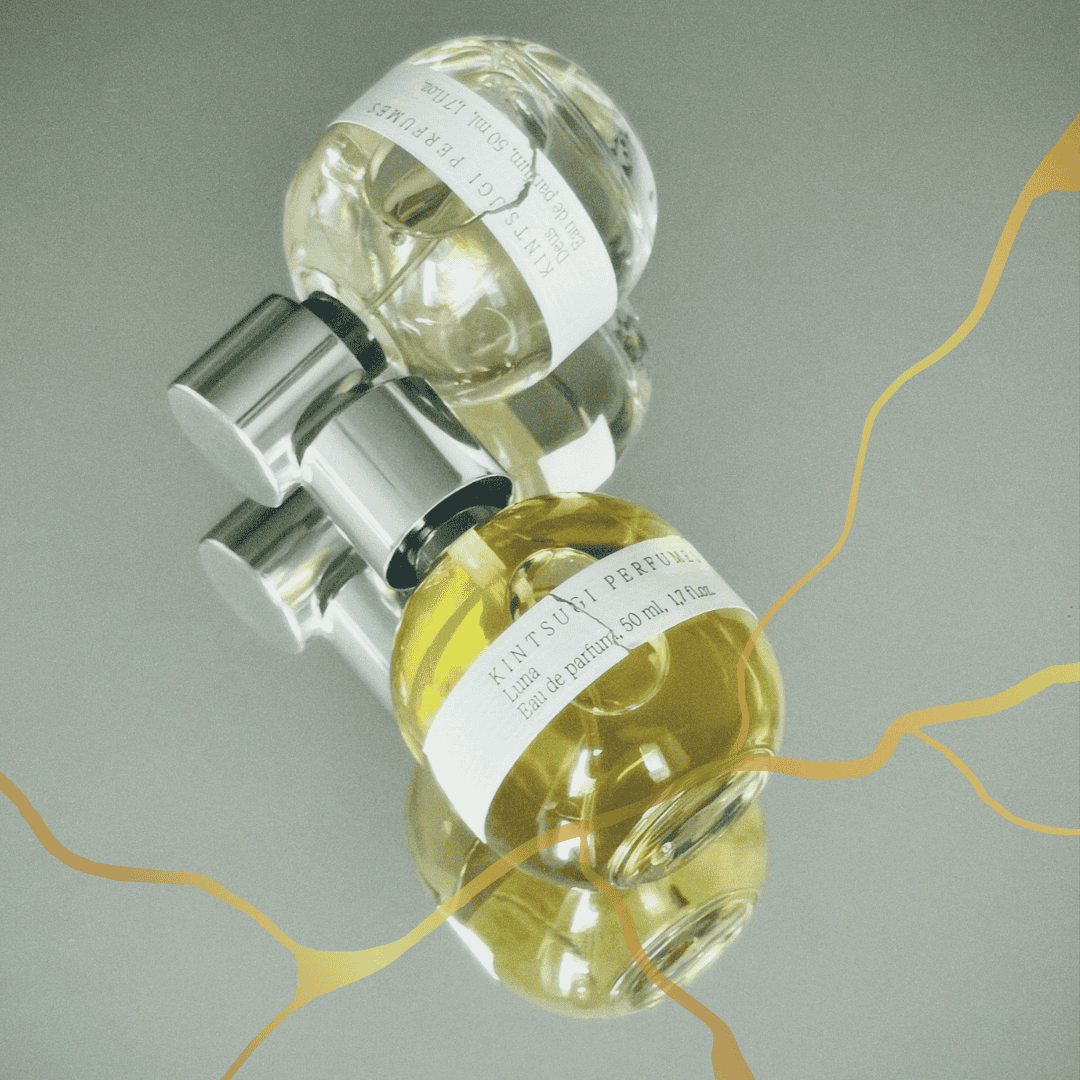
For collectors, the landscape shifts again. A niche fragrance for collectors isn't automatically more expensive or rarer. It's often simply: historically interesting, exceptionally crafted, emotionally resonant, or stylistically unique. Collectors think in terms of lines. They recognize signatures. They sense whether a perfumer is searching for something new or merely repeating a theme. And they don't just buy fragrances—they build a library. Some bottles are chapters, others are footnotes, still others are the sentences you never forget.
The trap of hype: when passion becomes a reflex
But collecting is also a trap. The scene tempts you to constantly want "just one more." Another new release, another limited drop, another bottle before it's gone. If you're not careful, passion becomes a reflex. And this is precisely where the wheat will be separated from the chaff in 2026: The best collectors will once again become curators of their own collections. They sell, they reduce, they organize. They don't chase every hype. They refine their taste. They don't want a lot—they want to do it right.
The real criterion: seriousness
The truth is: beginners and collectors aren't target groups, they're states of being. You can be a collector and still remain a beginner if you only buy. You can be a beginner and still have a mature approach if you learn slowly. Niche isn't about being "level 10." Niche is a different relationship with fragrance. A relationship that allows you to wear exceptional scents not as trophies, but as experiences. And once you've found that relationship, you realize: the best fragrances aren't the loudest. They're the ones that linger—in your memory, in your mood, in the way you read yourself.
Ultimately, it all boils down to a simple, uncomfortable realization: Niche isn't where things are "different." Niche is where there's genuine commitment. And that's precisely why curation in 2026 isn't a luxury, but a filter against mediocrity. When you read scent news, you don't want the next list, the next noise, the next hype. You want guidance with substance. That's exactly what Georg R. Wuchsa has been curating for decades – and that's precisely why the selection at scent amor isn't a catalog, but a standpoint: for niche fragrances that don't decorate, but stir something within you.
FAQ – Your compass for niche fragrance 2026, beginner questions and collector logic
What does niche fragrance really mean – and why will niche perfume be in such high demand in 2026?
A niche fragrance is primarily a matter of personal style: scent as an artistic statement rather than a mass-market formula. By 2026, niche perfumes will be judged more on their substance because the market has become more saturated and many use the "niche" label merely as a marketing ploy. Demand is rising where fragrances don't aim to please, but rather to express something – more subtly, precisely, and consistently.
Which trends will have a particularly strong influence on niche perfume in 2026?
The dryness, texture, and close contact with the skin are striking: less effect, more craftsmanship. Gourmands are becoming more sophisticated; amber and woods appear less decorative and more materially compelling. At the same time, there is a precise maximalism: ambitious in concept, but meticulously crafted, without unnecessary ostentation.
Is unisex perfume just a trend in 2026 – or the better choice?
Unisex perfume is often the most logical form in 2026 because fragrance works through mood, texture, and memory—not through gender stereotypes. Nevertheless, search terms like "women's fragrance" and "men's fragrance" remain important as points of reference. The best niche fragrances take this reality seriously without confining you to stereotypes.
How can I, as a beginner, find the right niche fragrance without feeling overwhelmed?
Don't start with extremes, but with legible, structured fragrances that have character without overwhelming you. Wear samples for several hours, because niche perfumes often reveal themselves over time. What matters is not the first impression, but the lasting impression.
What distinguishes a niche fragrance for collectors from a regular purchase?
Collectors are thinking less in terms of "new releases" and more in terms of individual styles, developmental trajectories, and context. A niche fragrance becomes part of a library due to its material quality, emotional connection, or historical relevance. By 2026, collecting will have matured: less hype, more curation—also through conscious reduction.
Copyright by scent amor © 2026 (grw)
More articles on the scent news blog by scent amor:
The Proust Effect – why scents unlock memories that words cannot reach
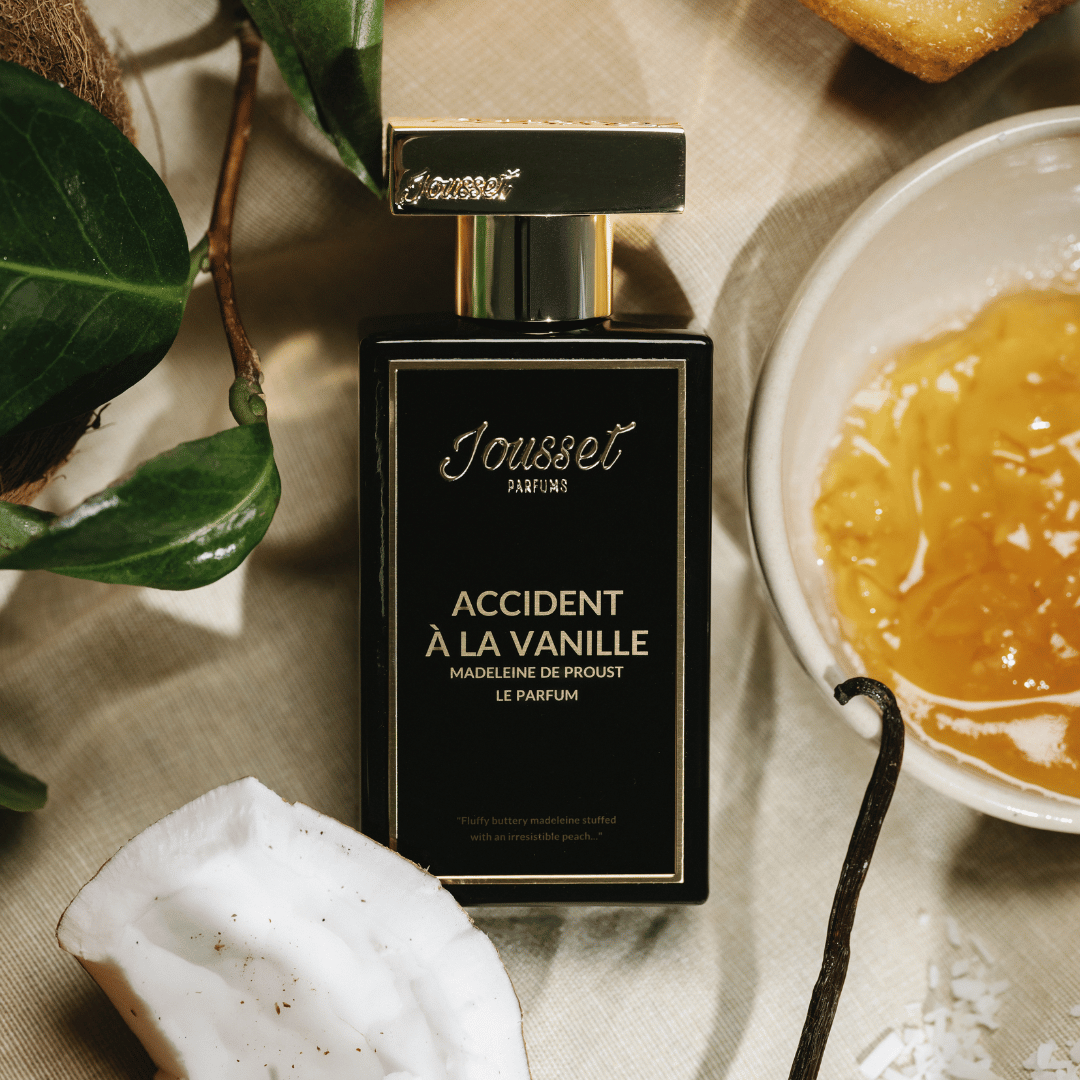
The Proust effect explains why scents trigger memories more immediately than words. JOUSSET perfumes bring this principle to life in niche fragrances – gourmand, warm, biographical. A niche perfum...

Leave a comment
All comments are moderated before being published.