

Perfume, Skin, and Perception: Why Niche Fragrances Can Smell Different on Everyone – and Why the Truth Behind So-Called Skin Chemistry Is Far More Fascinating Than the Myth.
Why the same fragrance never smells quite the same on you, on me, or on paper – and why the truth behind so-called skin chemistry is far more fascinating than the myth.
Inspired by many public discussions about skin chemistry and conversations with fragrance enthusiasts where this question repeatedly arises, I want to try to make this oft-cited phenomenon more tangible, objectively, understandably, and with an appreciation for fragrance. Because hardly any term in the world of perfume is used so naturally and yet so rarely explained precisely.
What does it actually mean when a fragrance "smells different on my skin"? Does a perfume really react chemically with our skin? Or are we primarily describing an interplay of evaporation, skin texture, body odor, memory, and perception with the term skin chemistry?
This is exactly where a closer look is worthwhile. Not to destroy the magic of perfume. But to understand it better. Because often reality is no less poetic than myth — it is just more precise.
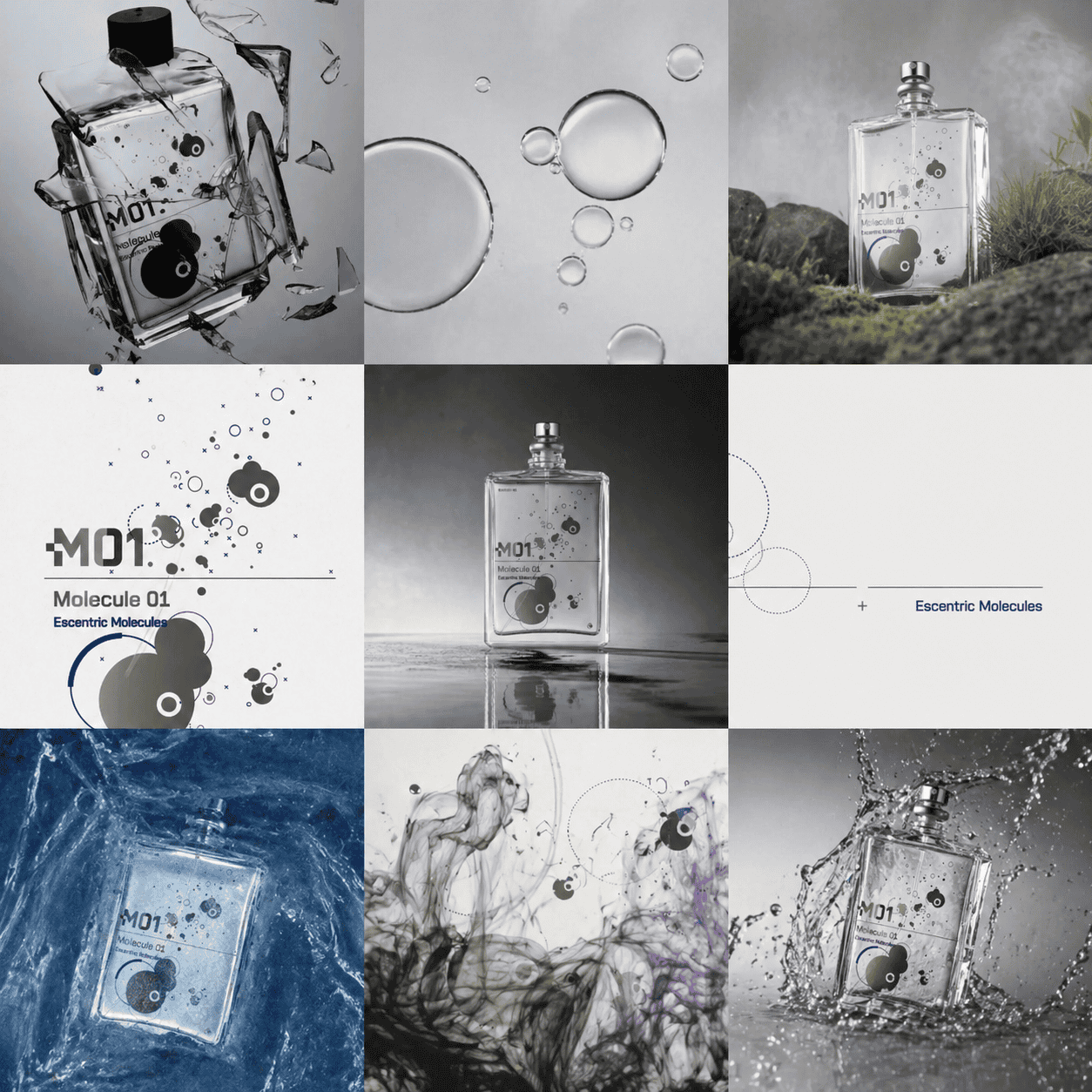
Why Skin Chemistry in Perfume Sounds So Convincing
Hardly any sentence is heard more often among fragrance lovers than this: "The scent smells completely different on my skin." You hear it in perfumeries, read it in forums, on Parfumo, in reviews, and in conversations about niche fragrances, classics, modern molecular fragrances, or big designer perfumes. Sometimes the explanation follows: "That's due to my skin chemistry."
And initially, the observation is not wrong at all. Fragrances indeed do not act identically on every person. A perfume can appear brighter on one person, warmer on another, creamier or drier on the next. Some experience vanilla as soft and flattering, others as sticky. Some perceive musk as clean, others as bodily or almost animalic. Some find amber warm and noble, others find it heavy.
So the question is not whether differences exist. The question is what causes them.
The popular notion of skin chemistry often suggests that perfume reacts completely new chemically on a person's skin. As if fragrance molecules would form different compounds on every skin, thereby creating a new composition. This very notion is too simplistic in most cases — and scientifically inaccurate.
A perfume is not magically reinvented on the skin. It doesn't suddenly transform into a different mixture of molecules just because you're wearing it. What we smell is initially created by fragrance molecules evaporating, entering the air, and being perceived by our nose.
Perfume is therefore, first and foremost, physics. Volatility. Temperature. Concentration. Evaporation.
What really happens when you apply perfume and niche fragrances
When you spray a perfume, an alcoholic solution of many fragrance substances lands on your skin. The alcohol evaporates very quickly. Afterwards, the actual fragrance substances remain and gradually turn into a gaseous state. This is exactly where the fragrance becomes perceptible to us.
The individual fragrance molecules evaporate at different rates. Light, volatile notes like bergamot, lemon, grapefruit, aromatic herbs, or some green accords rise early. They often shape the first impression of a fragrance. Heavier components like sandalwood, patchouli, labdanum, frankincense, musk, tonka bean, vanilla, or amber evaporate slower and last longer.
What we call fragrance development is often not a sudden emergence of new scent notes, but a gradual revelation of what was contained in the composition from the beginning.
If you think after an hour, "Now the amber is coming," then that amber was usually already present in the fragrance. It was just previously overshadowed by brighter, louder, or more volatile notes. As the top note fades, the deeper layers emerge.
This is precisely where the art of perfumery lies. A good fragrance is not simply a string of scent notes. It is a temporal event. It moves. It opens up. It loses something and gains something else in the process.
Why Paper Never Replaces Skin

One of the biggest misconceptions when testing perfume arises from the comparison between paper strips and skin. A fragrance can appear cool, harsh, or flat on paper and suddenly soft, lively, and complete on the skin. This quickly leads to the conclusion of skin chemistry.
However, the explanation is usually much simpler.
Skin is warm. Paper is cold.
Many low-volatility components of a perfume require warmth to become properly perceptible at all. Especially musk, balsamic notes, resins, woods, and some creamy base materials develop significantly better on warm skin than on a test strip. Paper often shows you the first impression, but rarely the full depth.
Furthermore, paper absorbs fragrance differently than skin. It has a different structure, different moisture, different temperature, and no natural lipid layer. Therefore, a niche perfume can appear much sharper or thinner on paper, while it seems rounder and more bodily on the skin.
However, this does not mean that the skin chemically recreates the fragrance. It simply provides a different stage for it.
Dry Skin, Oily Skin, and the Question of Longevity
Many people say: "My skin eats up fragrances." And here, too, there's a kernel of truth in the observation.
Dry skin is less effective at retaining fragrance molecules. If the skin has low moisture and low lipid content, some fragrance components evaporate faster. Well-cared-for, lightly moisturized skin can improve a perfume's longevity because fragrance molecules are bound for longer. This particularly affects the perception of longevity, intimacy, and projection.
But even here, the skin usually does not completely change the fragrance. It rather influences how quickly and how intensely a fragrance becomes perceptible.
A unisex perfume does not suddenly become a completely different scent on dry skin. A niche fragrance with iris, musk, and sandalwood might lose its softness faster or become a skin scent sooner. But it does not automatically turn into a green chypre or a fresh cologne.
So the skin can change the stage. But it doesn't rewrite the whole play.
Temperature and the Speed of Fragrance Development
Warmth also plays an important role. On warm skin, perfume develops faster. On cool skin, it develops slower. That's why fragrances often smell more intense in summer and more controlled in winter. That's why a fragrance often seems more present on the neck, wrist, or in the crook of the arm than on a cooler part of the skin.
Warmth increases the volatility of many fragrance compounds. This means more molecules enter the air faster. The fragrance appears stronger, more vibrant, sometimes even louder.

This can be beautiful. But it can also lead to a perfume suddenly becoming too much in the heat. A dense amber fragrance, a strong oud, a sweet vanilla, or a lush musk can seem much more pervasive at high temperatures than on a cool autumn evening.
This is also not magical skin chemistry. It is fragrance physics — but one with great sensual effect.
The pH of the skin is often overestimated

A particularly popular argument in discussions about skin chemistry is pH. It's often said that a fragrance smells different because someone has "acidic" or "basic" skin.
It's not that simple.
Natural skin is in a relatively narrow, slightly acidic range. Within this range, the volatility of most fragrance substances does not change dramatically. Many fragrance molecules are neither strongly acidic nor strongly basic. Therefore, the pH of the skin is usually not a sufficient reason for radical fragrance changes.
Of course, extreme conditions can influence fragrance substances. But with normal, healthy skin, such effects are usually subtle. So, anyone who says a fragrance goes from elegant to unpleasant solely due to the skin's pH usually falls short.

Are there still real biological differences?
Yes. And that's where it gets interesting.
The harsh statement "skin chemistry is complete nonsense" would also be too simplistic. Because people do indeed differ. Our skin has different moisture levels, different lipid content, different temperatures, different care habits, and an individual microbiome.
Our natural body odor is also real. It arises from many factors: skin, sweat, diet, hormones, clothing, care products, lifestyle, and microorganisms on the skin.
A perfume does not lie on a neutral glass plate. It lies on a living human being.
However, this does not mean that every perfume becomes chemically completely different on every skin. Most effects are subtle. They concern nuances, sillage, longevity, intimacy, warmth, softness, or projection.
Especially modern, transparent, and intimate niche perfumes can react more strongly to such nuances than very dense, classic compositions. A fragrance that deliberately leaves room connects more noticeably with the person wearing it. A very opulent fragrance covers the body odor more strongly and thus appears more stable.
The Microbiome and the Limits of Simplification

The skin microbiome is also sometimes brought into play as an explanation. Microorganisms live on our skin, breaking down sweat components and thus shaping body odor. Could they also alter fragrance compounds?
Fundamentally: yes, in certain cases it is conceivable. Some fragrance compounds can be altered by enzymes, skin lipids, oxygen, or light. Especially sensitive natural substances, certain aldehydes, esters, citrus components, or terpenes can oxidize or change slightly.
But again, this is not the grand alchemical transformation that skin chemistry is often described as. Most perfume raw materials are relatively stable. A fragrance is not fundamentally recomposed as a result. However, small shifts can occur that sensitive noses will certainly perceive.
The correct statement is therefore not: skin chemistry does not exist at all. But: the popular notion of skin chemistry is usually exaggerated.
Why the biggest difference is created in the mind

The most important factor is often underestimated in fragrance discussions: our brain.
We don't smell like a measuring device. We smell with memory, expectation, experience, and emotion.
A fragrance is never just a molecular pattern. It is also an inner image. When you smell rose, you don't just smell rose molecules. You might smell a garden, a cosmetic product, a memory, a grandmother, a love letter, an old bar of soap, or a modern luxurious niche perfume.
Those with a lot of experience in perfumery recognize certain notes faster. At the same time, experience can also be misleading. If you only know neroli from classic colognes, you automatically expect citrus, herbs, and freshness. If orange blossom appears in a warm, creamy, or amber-like context, it suddenly seems alien.
Even rose is a good example. Many people know rose not from the living flower, but from rose oil, cosmetics, soap, or old perfumes. A modern rose fragrance that interprets the flower as greener, more herbaceous, or more natural may therefore smell less like rose to some than a more artificial image of rose.
Our brain does not smell neutrally. It classifies.

Why a fragrance often smells better on others
A particularly interesting point is self-perception. A fragrance that you find beautiful on someone else can suddenly bother you on yourself.
This is not necessarily due to your skin. It is often due to the perception situation.
On other people, you usually smell perfume in motion, at a distance, diluted, in short moments. On yourself, you smell it much more directly, longer, and more intensely. Especially with sprays on the neck, chest, or décolleté, the fragrance constantly rises into your nose.
This can lead to habituation. Or to weariness. Or to a note that works wonderfully from a distance becoming too much in constant proximity.
Many gourmand fragrances show this effect particularly clearly. A fragrance with tonka bean, caramel, almond, vanilla, or milky warmth can seem delicious and inviting on someone else. On yourself, the same fragrance can become tiring after hours.
This is not a defeat of the fragrance. It is a difference between external perception and self-perception.
When a fragrance doesn't suit you
Sometimes people say: "This fragrance doesn't suit my skin." Often, they actually mean: "This fragrance doesn't suit my self-image."
That's a big difference.

A classic men's fragrance from the seventies can be objectively wonderfully composed. But if you associate it with your father, a certain generation, or a phase of life, it might not smell wrong on you, but rather unsuitable. It's not your skin rejecting it. Your inner image does.
Similarly, a powdery women's fragrance, a heavy chypre, a leathery classic, or a sweet gourmand can seem harmonious on another person, while you feel disguised in it yourself.
Perfume is always also identity. Therefore, the question is not just: How does this fragrance smell? But also: Who am I when I wear it?
The myth of skin chemistry is false — but not worthless
The term skin chemistry is scientifically imprecise. It is only conditionally useful as an explanation for radical fragrance transformations. But it describes a real experience: A fragrance does not act in isolation. It encounters a person.

And this person brings everything: skin, warmth, care, clothing, mood, memory, expectation, closeness, distance, daily form, and personality.
Perhaps skin chemistry is not a precise scientific term for that reason. Perhaps it is more of a poetic word for a very complex interplay.
But one should not misunderstand this word.
Perfume usually does not react on the skin like a laboratory experiment with completely new results. It develops on the skin. It becomes warmer, softer, more volatile, more durable, more intimate, or more present there. And above all: It is perceived by a person whose brain never smells neutrally.
What you can take away from this for your fragrance search
The most important advice is simple: Test fragrances on your skin, but don't expect miracles or catastrophes.
A test strip is helpful for the first impression. It shows direction, style, and rough structure. But the real truth of a fragrance often only reveals itself after a few hours on the skin.
Especially niche perfume thrives on development, depth, and nuances. A quick spray in the store rarely says enough. Give a fragrance time. Wear it calmly. Observe how it behaves in the morning, in the evening, in warmth, in cold, on well-groomed skin, and from a distance.
And above all: Don't just trust the first minute.
Some of the most beautiful extraordinary fragrances start off irritating and later become magnificent. Others seduce immediately and lose their tension after an hour. Still others seem inconspicuous on paper and develop a quiet, elegant presence on the skin.
That's why fragrance samples and decants are so valuable. They give you the opportunity to truly experience a fragrance instead of just briefly evaluating it.
The joy of the holy grail of perfume
In summary, I wish all fragrance enthusiasts much joy in their search for the holy grail of perfume. And perhaps also a little serenity. We don't have to stubbornly discuss the topic of skin chemistry, not analyze every fragrance experience, and not dissect every perception scientifically down to the last molecule.

But it helps to understand the background a little better.
Because whoever understands why a fragrance smells different on paper than on skin, why warmth plays a role, why dry skin can affect longevity, and why our brain connects fragrances so strongly with memory and emotion, smells more consciously. Not colder. Not more sober. But deeper.
The joy of a special fragrance should not suffer from this. On the contrary. It can become greater.

For isn't it a great stroke of luck that today we can choose from an almost infinite variety? From great classics, bold designer perfumes, quiet skin scents, opulent extraits, transparent molecular fragrances, and artisanally composed niche fragrances? That we can test, compare, search, discard, rediscover, and let ourselves be surprised?
Perhaps that is precisely where the true magic lies. Not in a fragrance being completely new on every skin. But in every person experiencing it differently.
And perhaps the best fragrance in the end is not the one that is objectively perfect. But the one that touches you, accompanies you, reminds you, strengthens you, or comforts you. The fragrance where you no longer ask if your skin chemistry is right. But only feel: Yes, this is me.
Further articles in the scent news blog from scent amor:

Escentric Molecules – the fragrance that invisibly revolutionized perfumery
Escentric Molecules, with Molecule 01 and Iso E Super, revolutionized modern niche perfumery by making a single fragrance molecule the star. Geza Schoen's brand is known for transparent, intimate n...



Leave a comment
All comments are moderated before being published.