





SCENT NEWS – Between the scents
This section is a place for what is often overlooked in the discourse on fragrance: nuances, memories, and quiet truths. Not as a counterpoint to the market, but as an invitation to rediscover fragrance as an experience – beyond novelty, evaluation, and assertion.
When everything wants to be new – and nothing remains the same
The niche fragrance market hasn't simply evolved in recent years; it has repeatedly outpaced itself. New brands are emerging at ever shorter intervals, fragrances are being launched faster, and trends race through social media before they can even be understood. What was once conceived as a conscious counterpoint to the mass market now threatens to become obsolete: too loud, too fast, too assertive.
Amidst this abundance, it is becoming increasingly difficult to distinguish substance from surface. Terms like artistic, handcrafted, or authentic are used excessively, losing their precision and thus their meaning. At the same time, a digital chorus of self-proclaimed experts is growing, each trying to outdo the other with their supposed knowledge. Evaluation replaces experience, opinion replaces context. Speed erodes depth.
The silent constant amidst the noise
And yet, there is one constant that withstands it all. Something older than any brand, stronger than any trend, and more independent than any campaign. It is the reason why we don't just smell fragrances, but remember them. Why they shape us long before we have words for them. Scent is one of the few media that doesn't explain memory, but triggers it.
The first scents of our lives
The first scents of our lives aren't perfumes in the classical sense. They are situations. Closeness. Body. Almost always, the scent of the mother comes first. Not as a clearly defined composition, but as a mixture of skin, cream, perhaps face powder, freshly laundered clothes. A scent without a label, but with meaning.
This scent is associated with moments of absolute security. With the feeling of being held. Protected. Loved. With the deep certainty that—no matter what happens—someone is there watching over us. This experience becomes ingrained, not rationally, but emotionally. It becomes part of our inner coordinate system.

Why security can have a smell
Years later, when we encounter a fragrance that evokes this memory—be it through powdery softness, clean skin tones, or creamy warmth—we often react without being able to consciously categorize it. We suddenly feel calm. Safe. At peace. Not because the fragrance is objectively "beautiful," but because it activates something within us that lies deeper than taste.
The reason for this lies in the limbic system. Scents bypass the detour of language and evaluation. They directly connect with memory and emotion. That's why we sometimes no longer know where a feeling comes from – but we sense it immediately. Well-being arises not from analysis, but from recognition.
The familiar as a counterweight to sensory overload
Perhaps this explains why we today are not only looking for extraordinary fragrances, but for those that sustain us. That make us feel good. That give us back something we thought we had long lost. In a time when everything wants to be new, the familiar gains a new depth.
Not every fragrance has to be provocative. Not every fragrance has to be loud. Some are simply meant to remind you.
Early scent anchors beyond the mother
But the mother isn't the only early olfactory anchor. Many of our olfactory imprints are formed in everyday situations we think we've long forgotten. The smell of freshly laundered bed linens. A wooden wardrobe filled with clothes. The warm air of a kitchen on a Sunday morning. Soap in our grandparents' bathroom. Dusty summer air in the stairwell of an old building. Paper, books, school bags.
They are not spectacular scents – but they are formative. They structure our inner map. They mark places, times, feelings. That's why they can suddenly hit us decades later – not as a memory in our minds, but as a state in our bodies.
The body remembers differently than the mind.

Scents are not just mental markers; they are physically anchored. Breathing, skin contact, proximity – all of these intensify the depth of the memory. A scent on the skin has a different effect than on paper. It mixes with body heat, with individual skin chemistry, with movement. The body learns scents long before the mind categorizes them.
That's why some scents feel instantly right, while others feel strange or unpleasant. Not because they're poorly composed, but because the body can't categorize them. Closeness and security are physical states – and scent is one of their strongest triggers.
Why memory has nothing to do with nostalgia
Memory is often confused with nostalgia. But nostalgia looks back, while memory anchors. A fragrance that reminds us of something from the past doesn't pull us back into it – it connects past and present. It makes tangible what has shaped us and still resonates with us today.
That's precisely why fragrances imbued with memories are not an escape, but a source of orientation. They offer support in moments of change. They are not stagnation, but an inner point of reference. Fragrance doesn't preserve time – it reawakens feelings.
Why we suddenly can no longer tolerate certain scents
Almost everyone is familiar with this phenomenon: A fragrance that was once loved suddenly seems strange, too strong, or even repulsive. Not because it has changed – but because we have. Fragrance reacts sensitively to internal shifts.
Life changes, losses, new roles, new responsibilities – all of these alter our perception. Scents that once provided security can suddenly create a feeling of confinement. Others, which we never noticed before, gain significance. This rejection is not a betrayal of one's own taste, but a sign of growth.
Scent and identity – who we are because of how we smell

Identity arises from these early scent anchors. Not in the sense of a consciously chosen style, but as a subtle imprint. We feel drawn to certain fragrance families without knowing why. Some people seek cleanliness, others warmth. Some clarity, others softness. Scent preference is rarely accidental – it's biography.
What we perceive as too sweet, too strong, or too intimate often has less to do with the fragrance itself than with our personal history. Fragrances that resonate with us affirm something within ourselves. That's why we don't simply wear fragrances—we recognize ourselves in them.
Over the years, this relationship changes. Our sense of smell matures. What was once pleasing suddenly seems loud or empty. What was previously overlooked gains depth. This is not a loss, but rather a process of development. Maturity often smells quieter, but more lasting.
The silent resistance: Fragrance as a conscious decision
In a world of constant sensory overload, consciously choosing a fragrance—and sticking with it—can be a quiet act. Repetition creates a connection. Connection creates meaning. It's not the quantity of fragrances that determines depth, but the duration of the encounter.
A fragrance that accompanies us for years becomes part of our story. It changes with us. This way of wearing fragrance is not a statement to the outside world, but an attitude to the inside.
Why modern fragrance culture overlooks this depth
Today's fragrance culture rarely addresses these connections. It favors novelty, intensity, and quick categorization. Fragrances are compared, ranked, and rated—but hardly ever experienced. The market rewards attention, not engagement. Depth takes time. Time doesn't sell well.
This creates a world of fragrance where everything is explained, but little remains. Where you know a lot, but feel little. Where the next fragrance is more important than the connection to the last. Yet the true power of fragrance lies not in spectacle, but in its lingering quality.
When silence regains meaning

This void becomes particularly noticeable at the end of the year. The turn of the year is not a moment of acceleration, but of reflection. A pause. That's precisely why texts like this one are needed. Texts that don't drive, but anchor.
SCENT NEWS sees itself as a place for this classification. Between market and person. Between fragrance as a commodity and fragrance as an experience.
And this brings us full circle to scent amor .

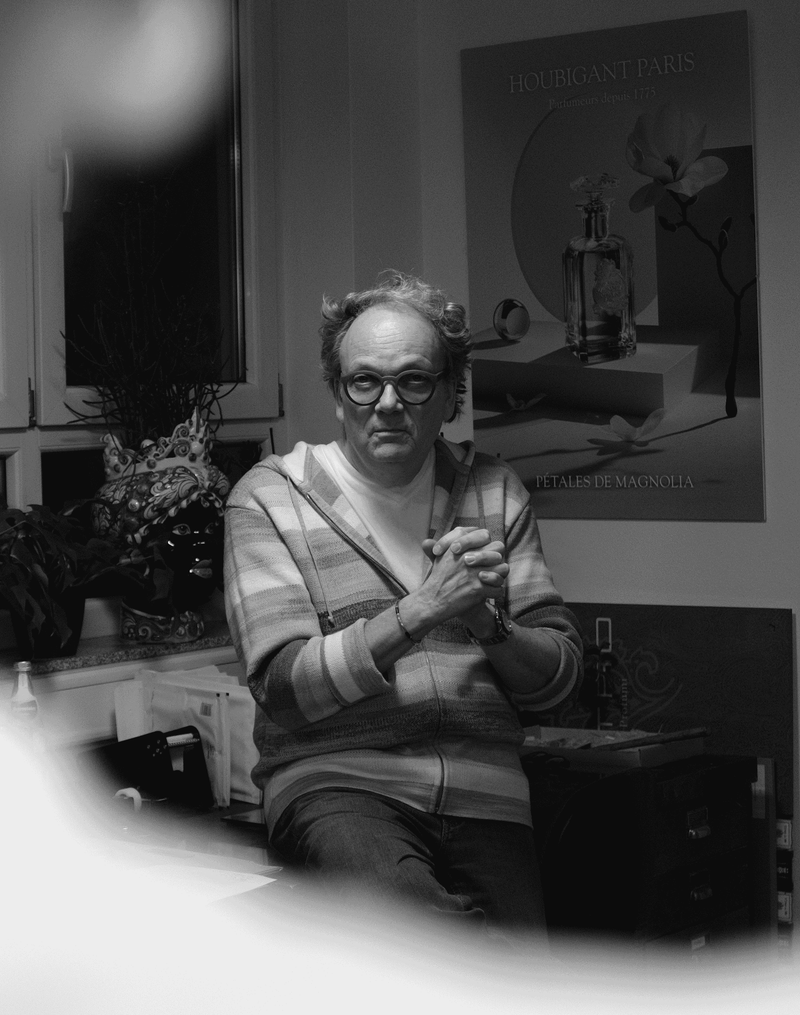
Not as a sales platform, but as a curated space. The result of decades of engagement with fragrance – driven by Georg R. Wuchsa , for whom perfume is not a trend, but a continuous, personal pursuit. A hobby, yes – but one with depth, experience, and conviction.
Scent amor stands for choice, not excess. For connection, not mere temptation. For fragrances that are meant to last.
Because perhaps we are not looking for novelty in fragrance,
but a moment in which we get closer to ourselves again.
Copyright by scent amor © 2026 (grw)

Leave a comment
All comments are moderated before being published.